Style Quiz: How to Identify Your Fashion Personality and Build a Wardrobe That Fits
This style quiz starts with a simple scene: you're standing in front of an open closet with ten minutes to dress for something that actually matters. What do your hands reach for? Not the aspirational pieces gathering dust on the left — the ones you wear on repeat. That instinct is the single most honest signal of your real fashion style, and it's exactly what the quiz above measures. By the end of this article you'll know your style family, how to build a wardrobe around it, and the one mistake that quietly wastes most people's clothing budget.
Your Clothes Are Already Talking
Before you say a word, people read your outfit in roughly a tenth of a second — that's the windowpsychology research on first impressions has found is enough to form a snap judgment. Clothing is a fast, visual shorthand for how you want to be seen, which is why a polished blazer and a worn-in leather jacket send opposite messages even at a glance. A good style quiz isn't about chasing trends; it's about getting your outside to match your inside so the message lands the way you intend.
Most people never define their style on purpose. They accumulate clothes one impulse buy at a time, then wonder why a full closet produces nothing to wear. The fix isn't more shopping — it's a framework. Once you know your style family, every future purchase gets a clear yes or no, and the "nothing to wear" problem starts to dissolve.
The Six Style Families, Side by Side
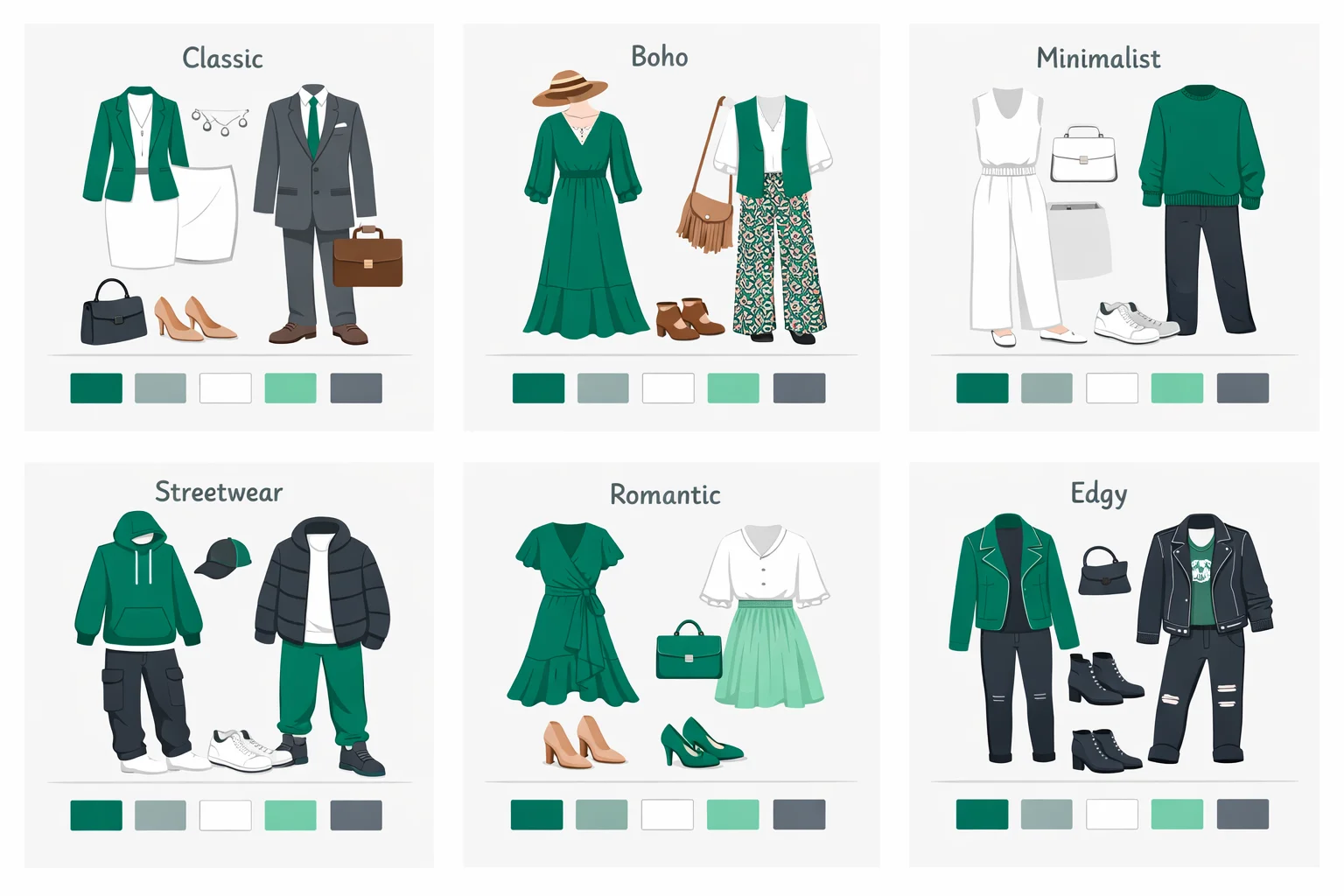
Stylists tend to sort personal aesthetics into a handful of recognizable families. This quiz uses six, chosen because they cover the vast majority of how people actually dress without drowning you in micro-labels. Here's how they compare on the things that matter when you're shopping:
| Style | Silhouette | Go-to fabrics | Signature piece |
|---|---|---|---|
| Classic | Tailored, structured | Wool, cotton poplin | Belted trench coat |
| Minimalist | Clean, straight lines | Matte cotton, fine knit | Structured neutral coat |
| Boho | Flowing, layered | Suede, gauze, chunky knit | Suede fringe jacket |
| Streetwear | Oversized, relaxed | Fleece, nylon, jersey | Statement sneakers |
| Romantic | Soft, fluid | Silk, lace, cashmere | Floral midi dress |
| Edgy | Sharp, fitted | Leather, distressed denim | Biker jacket |
Notice that no row is "better" — they're different strategies for looking intentional. A Classic dresser and a Streetwear native can both be perfectly put-together; they're just speaking different visual languages. If color is also on your mind, pairing this with the color analysis quiz tells you which shades to buy these silhouettes in, while the body type quiz pins down which silhouettes flatter your proportions in the first place. The hair type quiz rounds out the look by pinning down the cut and care your texture actually wants. Clear skin sells any outfit, so our skin type quiz is a smart final piece — it tells you the routine your face needs before the clothes ever go on. The same taste that steers your wardrobe usually decorates your walls, too, so if you're curious what aesthetic you'd want to live inside, the interior design style quiz reads your look at room scale. And if you want the big-picture label for the whole mood — cottagecore, old money, grunge, and the rest — the aesthetic quiz names the vibe your wardrobe is reaching for. A signature look has an invisible layer, too — the way you smell — so the perfume quiz finds the fragrance family that matches the aesthetic you just pinned down.
How This Quiz Reads Your Taste
The quiz doesn't just count which style you picked most. It scores your answers on three sliding scales — how polished versus relaxed you lean, how understated versus bold you go, and how timeless versus trend-led you are. Those three axes are why two people who both land on "Classic" can still get visibly different style DNA bars: one might be a polished, understated Classic, the other a Classic with a louder, trend-curious streak.
It also reports a primary and a secondary style. That second result isn't a footnote — it's where your outfits get personality. A Minimalist with a Romantic streak softens clean lines with a silk blouse; a Classic with an Edgy streak slips combat boots under tailored trousers. The blend is the point, which leads to the thing most quizzes get wrong.
The Capsule Math That Saves You Money
Here's the practical payoff. Once you know your style family, you can build a capsule wardrobe — a small set of pieces that all mix together — and the math is genuinely surprising. Say you build around your result with 5 tops, 4 bottoms, and 3 layers, all in your core palette. That's 5 × 4 = 20 base combinations, and each of the 3 layers multiplies it again, landing you near 60 distinct outfits from just 12 pieces.
Compare that to the typical closet, where half the items don't coordinate with the other half. A Minimalist's greige-and-stone palette means almost everything pairs by default; a Boho's earthy rust-and-olive range works the same way. The lesson isn't to own less for its own sake — it's that pieces inside one style family compound, while scattered impulse buys just sit there. A 2019 wardrobe study widely cited in slow-fashion circles estimated people wear only about 20% of what they own; a style-anchored capsule is how you flip that ratio.
Here's Why Almost No One Is a Single Style
If your result felt mostly right but not perfect, that's expected. Pure, single-style dressers are rare — most of us are a dominant family with one or two streaks running through it. That's not indecision; it's range. The most personal, memorable looks usually come from a deliberate clash: something soft against something tough, something polished against something relaxed.
Think of your primary style as the grammar and your secondary as the accent. A Romantic-Edgy person wearing a lace dress with a leather jacket reads as far more interesting than someone committed to head-to-toe sweetness. If you're curious how these style instincts connect to deeper identity, the female archetype quiz digs into the psychology underneath the wardrobe.
The Mistake That Makes Pricey Clothes Look Cheap
The single most expensive habit in fashion isn't buying cheap clothes — it's buying off-style ones. A genuinely well-made coat looks wrong if it fights your aesthetic, while a modest piece that fits your style and body looks intentional. People constantly assume an outfit looks cheap because of the price tag, when the real culprit is that the pieces don't belong to the same visual family.
That's the quiet superpower of knowing your result: it turns shopping from emotional to strategic. You stop buying the trend that looked great on someone with a totally different style personality, and you start buying the version of that trend that's actually yours. Fit matters here too — even the right style in the wrong proportions falls flat, which is why tailoring an inexpensive piece often beats buying a pricey one off the rack.
All 6 Style Personality Results
Here's a closer look at every result the quiz can give you, so you can see where you land and where your secondary streak might pull you.
🧥 The Classic — You build around timeless, tailored pieces that never date: the trench, the white shirt, the great loafer. You read as polished and reliable, and your closet rarely embarrasses you. The one risk is predictability, so a single current piece each season keeps your look fresh rather than safe.
🤍 The Minimalist — You live in a tight, neutral edit where everything mixes with everything. Quality and clean lines matter more than quantity or logos. Your weak spot is that monochrome can read flat, so texture — a ribbed knit, a matte leather — becomes the detail that quietly carries the whole outfit.
🌿 The Free Spirit (Boho) — You favor flowing silhouettes, earthy tones, and a lived-in, layered finish that feels personal and warm. Structure isn't your friend; movement is. The catch is that "undone" can slide into "unfinished," so one grounding piece keeps the look deliberate.
🧢 The Streetwear Native — You wear culture, building relaxed fits around the right sneakers and a few hard-to-find pieces. Comfort and status share the same outfit. Your trap is buying every drop until your closet is loud but incoherent — the sharpest streetwear is edited down to one hero piece per look.
🎀 The Romantic — You're drawn to soft fabrics, gentle silhouettes, and delicate details like lace and florals. There's real confidence in choosing pretty over edgy. The watch-out is that head-to-toe sweetness can read young, so one sharper element adds grown-up contrast.
🖤 The Edge — You dress to stand out: leather, dark tones, hardware, and an unmistakable attitude. You're comfortable being the most striking person in the room. The risk is that all-edge can feel like a costume, so mixing in one softer or tailored piece is what reads as genuinely cool.
What to Do With Your Result
Don't treat your result as a cage — treat it as a filter. Start by pulling the pieces you already own that fit your style family into one section of your closet; that's your foundation, and it's usually bigger than you expect. Next time you're tempted by something, ask one question: does this mix with at least three things in that section? If not, it's a one-off, and one-offs are how closets get crowded. Your style profile isn't the end of self-expression — it's the structure that finally lets you express yourself without the guesswork.