Interior Design Style Quiz: The Century of Rebellions Behind Your Home Aesthetic
This interior design style quiz sorts you into one of eight looks — but here's the part almost no one tells you: every one of those looks started as a rebellion against the one before it. The minimalism you might have matched with was a revolt against Victorian clutter. The mid-century sofa you love was a reaction to that same minimalism feeling too austere. Your taste isn't random. It sits at the end of a hundred-year argument about what a home is supposed to do.
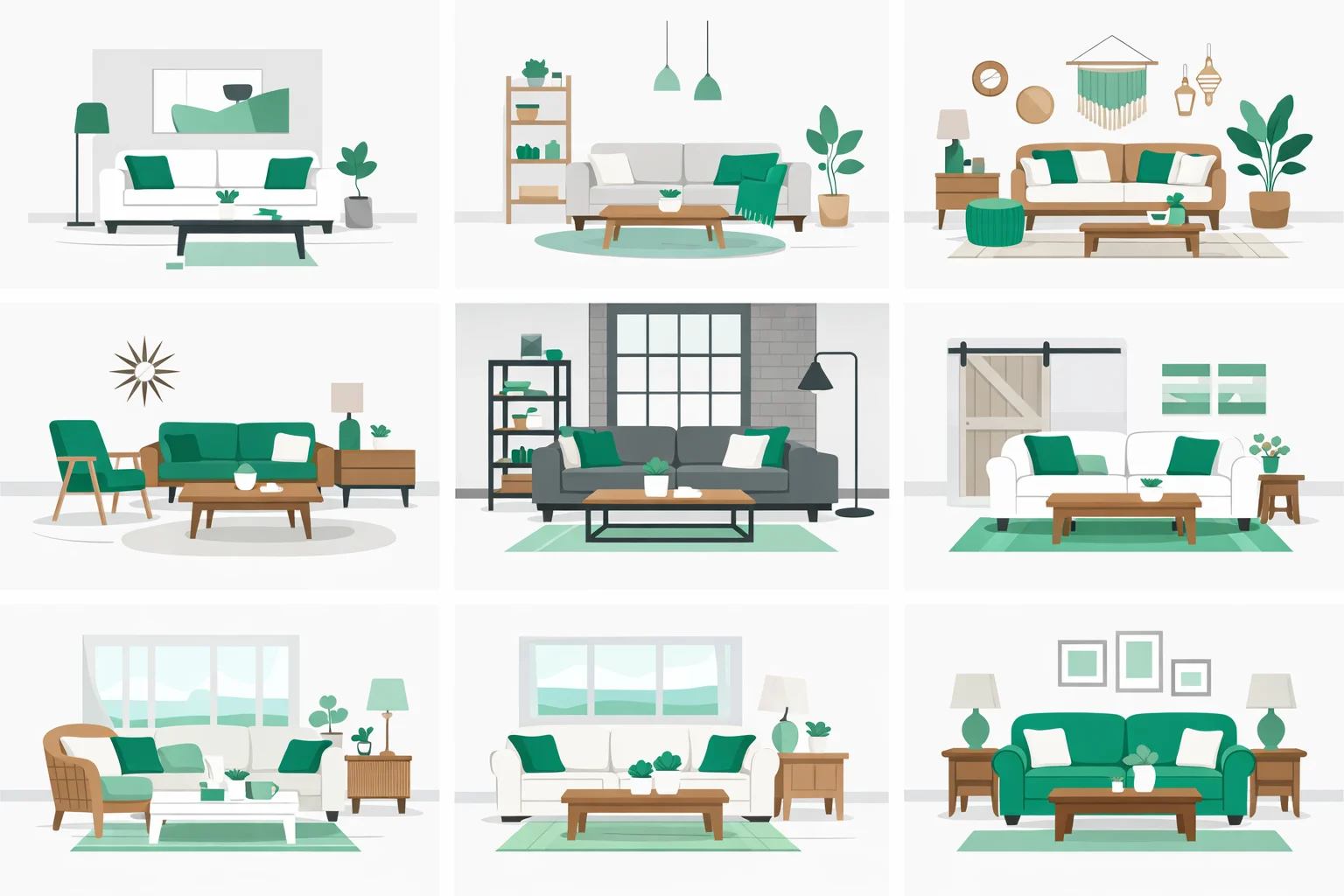
Every Style in This Quiz Began as a Rebellion
Wind the clock back to 1919. A German art school called the Bauhaus threw out ornament, gilt, and fuss, and declared that form should follow function. That one idea is the seed of nearly everything we now call “modern.” Strip it back further and you get minimalism. Add Nordic wool and warm light and you get Scandinavian. Give it tapered legs and a splash of mustard in postwar America and you get mid-century.
Meanwhile, other styles grew from the opposite instinct. When artists moved into abandoned SoHo factories in the 1970s, they didn't hide the pipes and brick — they celebrated them, and industrial design was born. Bohemian style traces back even further, to the broke artists of 19th-century Paris who furnished their rooms with whatever the world handed them. And traditional style never rebelled at all; it's the Georgian and Victorian richness the modernists were pushing against in the first place. Here's how the timeline stacks up:
| Era | The movement | Lives on today as |
|---|---|---|
| 18th–19th c. | Georgian & Victorian Europe | Traditional |
| 1919 | The Bauhaus, Germany | Minimalist & modern |
| 1930s | Nordic functionalism | Scandinavian |
| 1945–69 | Postwar American modern | Mid-Century Modern |
| 1960s–70s | SoHo loft conversions | Industrial |
| 1960s–70s | Counterculture revival | Bohemian |
| 2010s | The “Fixer Upper” boom | Modern Farmhouse |
Why Does the Room You Love Change How You Feel?
It isn't your imagination that a cluttered room makes you tense and a spare one makes you exhale. The field of environmental psychology has spent decades measuring exactly this: rooms with natural light and greenery lower stress hormones, warm materials read as safer to the nervous system, and visual clutter measurably taxes attention. Your quiz result is really a shorthand for the emotional climate you're trying to build. A Minimalist is chasing calm. A Bohemian is chasing stimulation and story. A Farmhouse type is chasing welcome.
That's also why arguments about décor between partners get heated so fast — you're not fighting about a sofa, you're negotiating two different ideas of what “home should feel like.” The same instinct shows up in how you dress, which is why your result here often echoes your personal style quiz outcome. The person drawn to clean, structured clothing tends to want clean, structured rooms too — and if you want the single word that ties your wardrobe and your walls together, the aesthetic quiz names the overall vibe, from cottagecore to old money.
The Eight Styles at a Glance
Before we go deeper, here's the whole cast in one view. Notice how the palette and the signature material do most of the identifying work — you can often name a style from across the room before you spot a single piece of furniture.
| Style | Palette | Signature material | Feels like |
|---|---|---|---|
| Minimalist | White, grey, black | Matte, seamless surfaces | Calm and edited |
| Scandinavian | White, blond wood, sage | Light wood + wool | Cozy and bright |
| Bohemian | Terracotta, rust, teal | Rattan & textiles | Free and layered |
| Mid-Century | Teak, mustard, olive | Walnut + tapered legs | Retro and warm |
| Industrial | Concrete, black, rust | Brick & raw steel | Moody and raw |
| Modern Farmhouse | Warm white, sage, black | Shiplap & oak | Welcoming and crisp |
| Coastal | White, sand, blue | Rattan & jute | Breezy and calm |
| Traditional | Ivory, navy, burgundy | Rich wood + velvet | Elegant and timeless |
The Four Dials Every Room Is Tuned To
Your result screen shows a “Design DNA” readout, and it's worth understanding what those bars actually measure — because it's the same four dials a professional designer turns, whether they call them that or not. Every one of the eight styles is just a different combination of these settings.
Warmth is the temperature of your palette and materials — cool concrete and white at the low end, honeyed wood and terracotta at the high end. Color and pattern measures how much visual noise you welcome; Minimalist sits near the floor, Bohemian near the ceiling. Ornamentation tracks decorative detail, from bare and functional to carved, tufted, and gilded (Traditional pins this one). And layering is about coziness — how many rugs, throws, and textures pile up to make a room feel enveloping rather than airy. Two people can both love “calm” rooms and still land on different styles because their warmth and layering dials are set differently. That's the whole reason a single “are you tidy?” question can never place you correctly on its own.
Here's Where It Gets Interesting — Almost Nobody Is One Pure Style
If your result felt about 80% right, that's not a flaw in the quiz — it's the honest answer. Real homes are blends, and the most celebrated looks of the last decade are literally named after their combinations. Japandi fuses Japanese minimalism with Scandinavian warmth. “Modern coastal” is coastal with the kitsch stripped out by minimalism. “Boho farmhouse” softens all that shiplap with layered rugs and plants.
The rule that keeps a blend from looking like a yard sale is simple: pick one style as the lead — roughly 70% of the room — and let the second play a supporting 30%. Then tie them together with one shared thread, usually a color or a repeated material. Your result names your most natural pairing for exactly this reason. If your palette pulled you in, a deeper dive into the shades that suit you personally is worth a detour through our color analysis quiz, which reads warm-versus-cool the same way a room does.
The Thin Line Between a Style and a Cliché
Every style on this list has a version that's gone stale from overuse, and knowing the trap is half of avoiding it. Modern Farmhouse is the cautionary tale of the decade: shiplap on every wall, a “gather” sign, and greige everything turned a warm look into a punchline on flipped houses. Industrial curdles into a cold, hard box the moment you forget to add leather, warm bulbs, and a plant. Bohemian becomes a mess without one repeating color to organize the chaos, and Coastal slides into gift-shop territory the second literal anchors and rope show up.
The fix is almost always the same: one deliberate contradiction. A minimalist room needs one genuinely warm texture. A traditional room needs one modern piece so it reads as “collected” rather than “dated.” The clichéd version of any style is the one that's all in on itself with no counterweight — and your result's “don't let it tip into cliché” list is built around each style's specific failure mode.
All Eight Interior Design Styles, Decoded
🤍 Modern Minimalist (14%). Calm, edited, and quietly expensive-looking. Minimalists build rooms around restraint — a neutral palette, clear surfaces, and one or two sculptural pieces given room to breathe. The strength is serenity; the weakness is coldness. Without warm texture and good light, minimalism reads as a showroom instead of a home.
🌿 Scandinavian (15%). Minimalism with a heartbeat. Blond woods, wool throws, white walls, and candlelight create a bright, cozy calm the Danes call hygge. It's endlessly livable, which is why it's one of the most popular results — but it drifts into anonymous flat-pack blandness the moment the warmth and texture disappear.
🪷 Bohemian (12%). Maximal, personal, and layered. Boho homes pile up rugs, plants, and globally-collected textiles into a happy controlled chaos. The upside is that no two are alike; the risk is tipping from “curated” into cluttered. A single repeating color is what keeps the jungle from becoming a jumble.
🛋️ Mid-Century Modern (13%). The optimistic postwar look — clean lines, organic curves, teak and walnut, and pops of mustard and burnt orange. One iconic chair can carry a whole room. Overdo the theme, though, and it stops feeling curated and starts feeling like the set of a period drama.
🏭 Industrial (8%). The rarest result, born in converted factory lofts. Exposed brick, concrete, black metal, and reclaimed wood make it moody and effortlessly cool. Its whole challenge is warmth: without leather, rugs, warm lighting, and greenery, industrial reads as cold and unwelcoming rather than raw and characterful.
🏡 Modern Farmhouse (18%). The most common match, and for good reason — it's warm, welcoming, and easy to live with. Shiplap, natural oak, sage green, and crisp black-and-white contrast blend rustic comfort with clean modern lines. Its only enemy is its own popularity; genuine vintage pieces are what keep it from looking like every flip on the market.
🐚 Coastal (11%). Light, airy, and calm, like a home a few steps from the water. Crisp whites, sandy neutrals, blues, and natural fibers create breezy serenity — nautical without the kitsch. The pitfall is theme overload; the elegant version suggests the sea rather than shouting it with anchors and shells.
🏛️ Traditional (9%). Timeless, symmetrical, and grounded in centuries of European design. Rich woods, deep colors, tufted upholstery, and antiques give it a gracious, confident feel that ignores trend cycles entirely. The one risk is stuffiness — a single contemporary piece is usually all it takes to keep “timeless” from becoming “dated.”
How to Use Your Result This Weekend
Knowing your interior design style is only useful if it changes what you actually do, so skip the big renovation fantasy and start with the things that move the needle fastest. Textiles, lighting, plants, and art do roughly 80% of a room's stylistic work and cost a fraction of furniture — a renter can shift a whole room's feel with a rug, a lamp swap, and a plant in a single afternoon. Pull your result's five-color palette up on your phone and use it as a filter: if a potential purchase doesn't sit somewhere in those shades, it probably won't belong.
Then resist the urge to buy the whole look at once. The homes that feel personal are the ones collected slowly, one considered piece at a time, with a little of that “one deliberate contradiction” baked in. Your style isn't a costume to put on in a weekend — it's a direction to steer in as things wear out and get replaced. In the bedroom, the piece that shapes your comfort most isn't on the wall — it's the bed itself, so our mattress quiz is a smart companion for building a room you actually sleep well in. And if this quiz got you curious about the deeper reasons you're drawn to calm over stimulation, or warmth over cool, that thread runs straight into our core personality quiz, where the same instincts show up far beyond the walls of a single room.