Enneagram Quiz: Your Type, Your Core Motivation, and What the 9 Really Mean
The free Enneagram quiz above starts from a question almost no other personality test bothers to ask: not what you do, but why you do it. Picture a small mistake at work — a report goes out with the wrong number in it. One person stays up rewriting it until it's flawless. Another quietly fixes it and never mentions whose fault it was. A third spins it into a story about how they caught it. Same event, three completely different reactions — and the reason behind each one is exactly what the Enneagram is built to find.
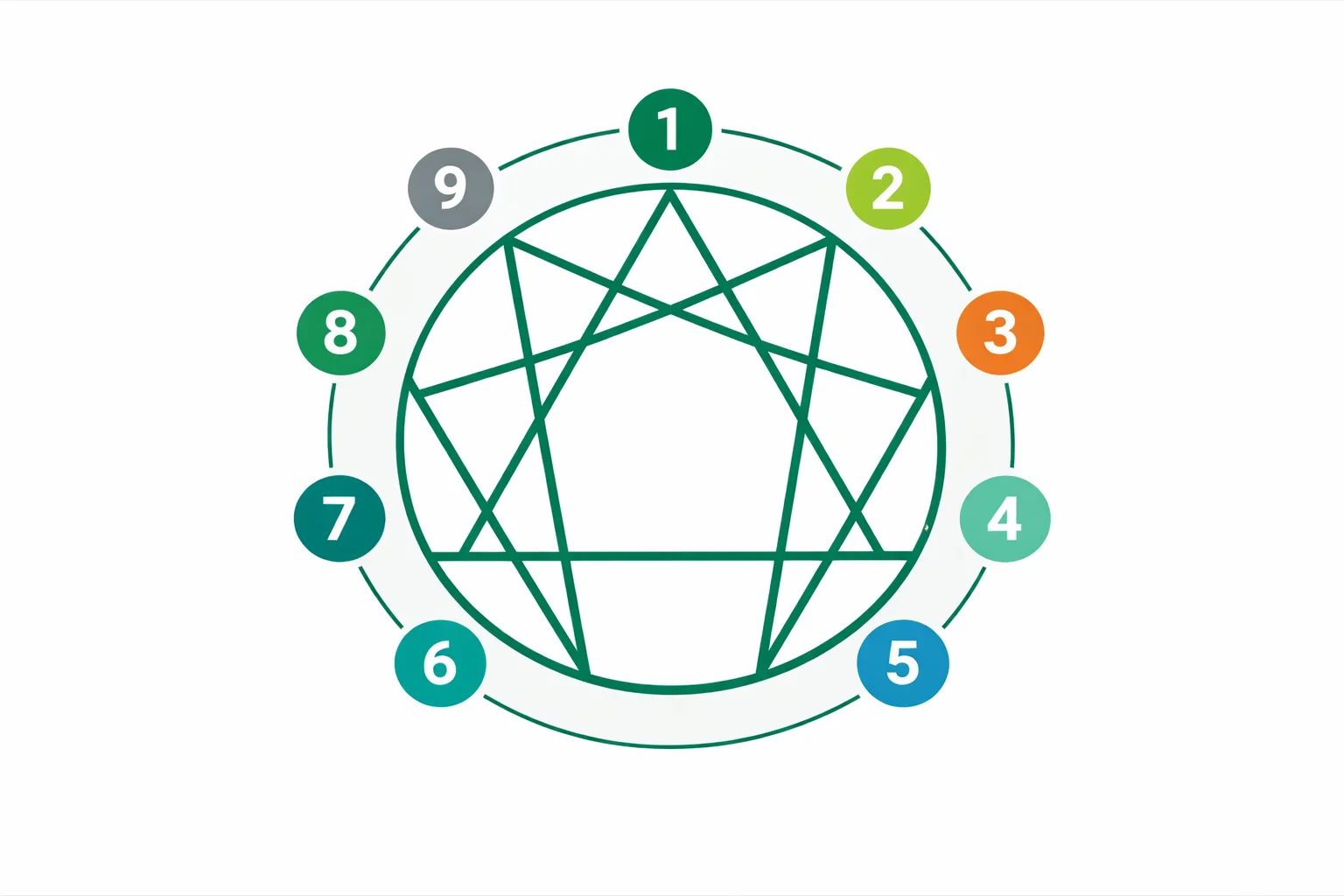
Three Coworkers, One Mistake, Nine Reactions
Let's stay with that wrong number in the report. The person rewriting it past midnight is probably a Type 1 — the mistake felt like a personal failing, proof they weren't careful enough, and the fear of being "wrong" is loud enough to cost them sleep. The one who quietly fixes it and shields whoever caused it? Often a Type 2 or Type 9, more worried about the relationship and the peace than about credit. And the one reframing it as a save is frequently a Type 3, who reads almost any situation through the lens of how it affects their image of success.
Now imagine a Type 6 in that meeting: they saw the error coming three drafts ago because they'd already imagined every way it could go wrong. A Type 8 would call it out bluntly and move on. A Type 5 would want to understand precisely how it slipped through. The behavior on the surface looks like "dealing with a typo." Underneath, nine different engines are running. That gap — between what people do and the motivation driving it — is the single idea the Enneagram is organized around, and it's why two people with identical jobs and similar habits can feel like opposites.
Why This Quiz Measures Fear and Desire, Not Traits
Most personality quizzes ask you to rate traits: are you organized, are you outgoing, do you like routine. The Enneagram does something stranger and, honestly, more useful — it tries to name your core fear and core desire. Every one of the nine types is built around a single thing it's desperate to avoid and a single thing it's reaching for. A Type 4 fears having no real identity and longs to be authentically themselves. A Type 7 fears being trapped in pain and chases freedom and stimulation to outrun it.
That's why the quiz above leans hard on questions about what stresses you, what you'd hate to be seen as, and the message you absorbed growing up. Those answers point at motivation in a way that "are you tidy?" never could. Two people can both be tidy — one because mess feels morally wrong (Type 1), one because clutter makes them anxious about losing control (Type 6). The trait is the same. The fear underneath is the whole difference, and the fear is what predicts how you'll act when the pressure is on.
Here's the part people find unsettling: the description that fits you usually isn't the flattering one. When you read your result, ignore the compliments and watch for the sentence about your core fear that makes you a little uncomfortable. That flicker of "ugh, that's me" is the most reliable accuracy check the system has.
There's a third variable neither traits nor fear quite captures, and it predates both systems by about fourteen hundred years: appetite. The seven deadly sins quiz sorts people by what pulls at them rather than what frightens them, and the overlap with Enneagram types is close enough to be useful as a cross-check. Threes and Eights very often come back as pride; Fours land on envy at a rate that would have amused Gregory the Great. If your Enneagram result felt slightly off, the appetite reading is a good second opinion.
The Three Centers: Gut, Heart, and Head
Before the nine types, there are three groups — and your result tells you which one you lead from. The Enneagram sorts the types into three centers of intelligence, each wrestling with a different core emotion:
| Center | Types | Core emotion | Leads with |
|---|---|---|---|
| Gut / Body | 8, 9, 1 | Anger & control | Instinct, the body, a sense of what's right |
| Heart / Feeling | 2, 3, 4 | Shame & identity | Emotion, image, connection to others |
| Head / Thinking | 5, 6, 7 | Fear & security | Analysis, planning, anticipating threat |
This is one of the most practical pieces of the whole model. If your result lands you in the Head center, your default move under pressure is to think your way out — research, plan, run scenarios. If you're in the Gut center, you act first and feel the consequences later. Knowing your center explains your style of reacting even before you get into the specifics of your number, and it's often the first thing that clicks for people who've never seen themselves described this way.
Wings and Arrows: Where Your Type Bends and Moves
A common complaint about typing systems is that they put you in a box. The Enneagram's answer is two clever features that keep your type from feeling like a cage. The first is your wing — one of the two numbers sitting next to yours on the circle, which colors how your type shows up. A 9 with an 8 wing (9w8) has more edge and assertiveness; a 9 with a 1 wing (9w1) is more orderly and principled. The quiz above figures out your wing by checking which of your two neighbors scored higher.
The second feature is the arrows, and this is where the Enneagram earns its reputation for being weirdly accurate. Each type is connected by lines to two others: one you move toward when you're growing and healthy (integration), and one you slip toward when you're stressed and stretched thin (disintegration). A normally easygoing Type 9 starts looking like an anxious Type 6 when life overwhelms them — and like a driven, goal-focused Type 3 when they're thriving. Your result shows both arrows by name, because watching which way you're currently moving tells you more about your week than the static number ever could. If you want to compare this motion-based view with a system built on fixed cognitive patterns, the MBTI quiz makes an interesting side-by-side.
Enneagram vs. MBTI: What Each One Actually Tells You
People constantly ask which is "better," and that's the wrong question — they're measuring different layers. MBTI describes how your mind processes the world: where you get energy, how you take in information, how you decide. The Enneagram describes why you're motivated to do any of it. You can be an INTJ who is a self-protective Type 6 or a strategic Type 5, and both labels are true at once.
| Enneagram | MBTI | |
|---|---|---|
| Core question | Why do you do what you do? | How do you think and process? |
| Built on | Fear, desire, motivation | Cognitive preferences |
| Changes under stress? | Yes — you move along an arrow | Type stays, behavior shifts |
| Best for | Self-awareness, personal growth | Communication, team styles |
If you found the Enneagram's motivation lens fascinating, it pairs naturally with a broader look at your traits. The general personality quiz rounds out the picture, the more symbolic female archetype quiz reveals the mythic role behind your motivation, and if you're thinking about how your type plays out professionally, the leadership style quiz shows how core motivation shapes the way you lead. And since several types are defined partly by whether they move toward people or withdraw from them, the introvert or extrovert quiz adds a clean read on where your social energy actually comes from. And if you like archetypes that arrive with a story attached, the viral soldier, poet, king quiz sorts you into one of three figures drawn from The Oh Hellos song. If the fact that this system runs on single digits at all intrigues you, that numbering is borrowed from a much older lineage — the angel number quiz scores the same 1-through-9 vocabulary, but reads it as your current chapter rather than your fixed type. For the curious, the official Enneagram Institute type descriptions go deeper into the levels of health within each type, and the Enneagram of Personality overview covers its history and the scientific debate around it.
All 9 Enneagram Types at a Glance
⚖️ Type 1 — The Reformer. Principled, self-disciplined, and quietly idealistic, Ones want to do things right and improve the world around them. Their gift is integrity; their struggle is a harsh inner critic that rarely lets anything be "good enough." The fear of being corrupt or wrong drives both their excellence and their resentment.
💞 Type 2 — The Helper. Warm, perceptive, and generous, Twos meet others' needs almost reflexively and feel most alive when they're indispensable. Their strength is genuine care; their blind spot is neglecting their own needs until resentment builds. Underneath the giving is a fear of being unwanted.
🏆 Type 3 — The Achiever. Ambitious, adaptable, and image-aware, Threes are built to set goals and crush them. They shine at motivating others and getting results, but can lose track of who they are beneath the accomplishments. Their core fear is being worthless without success to point to.
🎨 Type 4 — The Individualist. Emotionally deep, creative, and drawn to meaning, Fours crave authenticity and a sense of being truly seen. They turn feeling into art and empathy, but can get stuck longing for what's missing. The fear underneath is having no identity of their own.
🔬 Type 5 — The Investigator. Curious, analytical, and fiercely independent, Fives understand the world by observing it closely and conserving their energy. Their gift is depth of insight; their risk is retreating into the mind and away from life. They fear being incapable or drained dry.
🛡️ Type 6 — The Loyalist. Reliable, hardworking, and loyal, Sixes anticipate problems and stand by their people through anything. Their superpower is preparation and commitment; their struggle is a restless mind full of worst-case scenarios. At root, they fear being without support or security.
🎈 Type 7 — The Enthusiast. Upbeat, spontaneous, and endlessly curious, Sevens chase experiences and keep their options wide open. They bring energy and possibility everywhere, but can dodge anything painful or dull. Their core fear is being trapped in deprivation or boredom.
🔥 Type 8 — The Challenger. Decisive, protective, and intense, Eights take charge and shield the people they love. Their strength is fearless leadership; their soft spot is the vulnerability they hide behind the armor. They fear being controlled or harmed above all.
🕊️ Type 9 — The Peacemaker. Easygoing, accepting, and steady, Nines see every side and create calm wherever they go. Their gift is harmony and presence; their trap is going along with everyone else until they vanish from their own life. They fear loss of connection and conflict.
What to Actually Do With Your Number
Knowing you're a 4w5 or an 8w9 is mildly fun at a party and genuinely useful exactly once you start watching your arrows in real time. The next time you feel yourself sliding into your stress type's worst habits — the Nine getting anxious, the Three going numb — treat it as a dashboard light, not a verdict. It's telling you you're depleted, and pointing you toward the specific shift that helps. That's the real payoff: not a label to wear, but a map of how you tend to fall apart and how you tend to come back together. Retake the quiz in a few months when life looks different, and pay attention to which direction you've moved.