Dere Type Quiz: Every Anime Archetype, Decoded
This dere type quiz is built to do two things at once. By the end of it you'll be able to name the archetype hiding in almost any anime character within a few episodes — and, far more usefully, you'll know exactly which one you turn into the moment you actually catch feelings. “Dere” types began as otaku shorthand for the way anime love interests behave, but the reason the labels stuck is that they were never really about anime. They're seven very human ways of handling one genuinely terrifying thing: wanting someone.
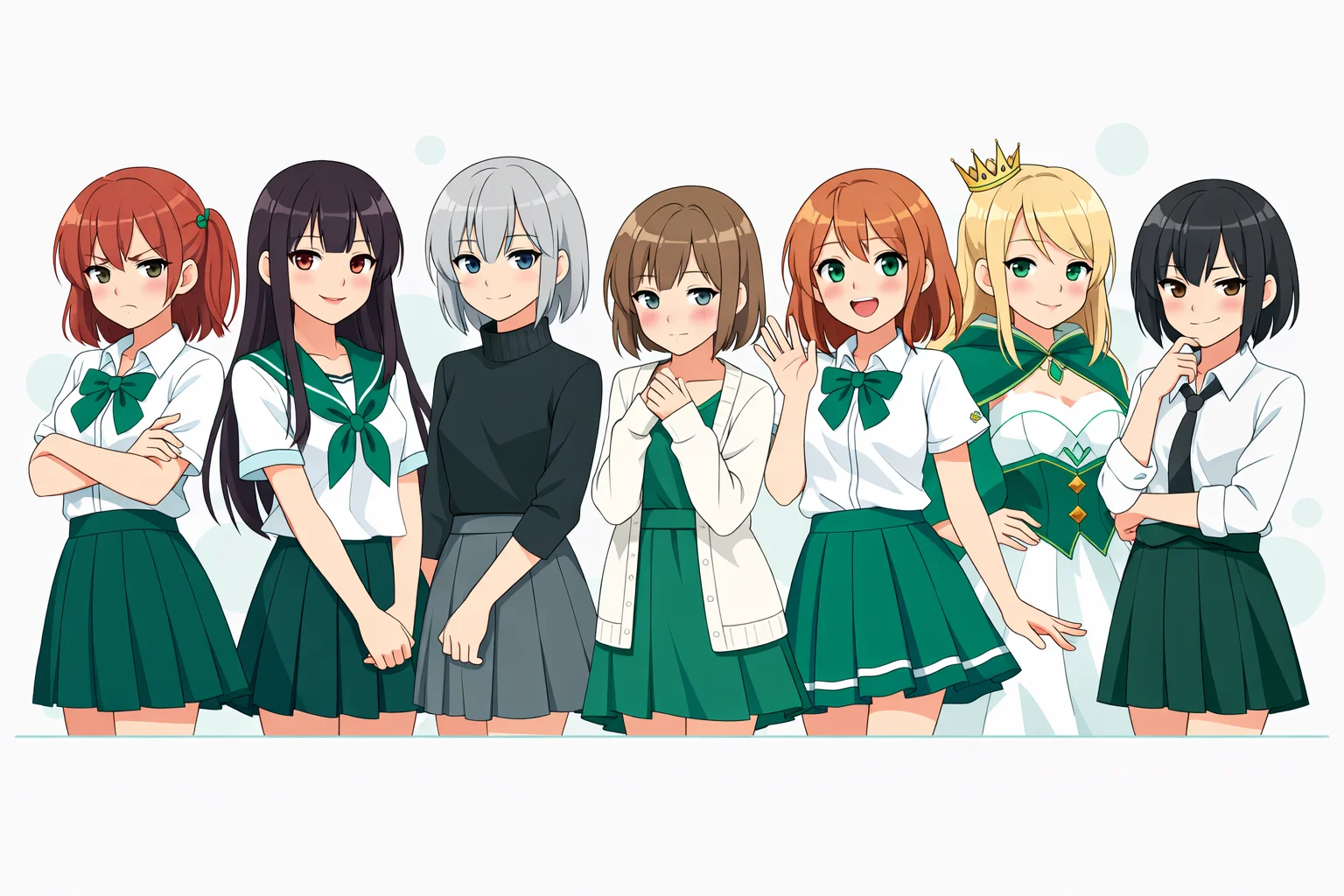
‘Dere’ Just Means Lovestruck — the Rest Is a Costume
Here's the piece most explainer videos skip: every single dere type ends in the same three letters for a reason. The “-dere” comes from deredere (デレデレ), Japanese onomatopoeia for going soft and gooey over someone — full lovestruck mode. Every other type just bolts a defense mechanism onto the front of that same core. Tsundere fuses tsun-tsun (ツンツン, prickly and turned-away) with the lovestruck part. Kuudere borrows the English word “cool.” Dandere takes danmari (silent). Yandere adds yanderu (to be sick). Himedere crowns it with hime (princess). Strip the prefix off any of them and you find the exact same besotted heart underneath — which is why your result says less about how much you love and more about the costume you wear while doing it.
The vocabulary is also younger than most people assume. “Tsundere” was essentially internet slang, traced to Japanese message boards like 2channel in the early 2000s and popularized by dating-sim and visual-novel fandom well before it ever went mainstream. It caught on because it finally named something fans had felt for years without a word for it — the character who insults you and blushes in the same breath.
How to Spot Any Dere Type in Three Episodes
You don't need to finish a series to type a character. You need one specific test: watch what they do the instant they feel something real. A tsundere overcorrects into hostility — Taiga Aisaka in Toradora! literally swings a wooden sword when she's embarrassed. A kuudere flatlines; Rei Ayanami from Neon Genesis Evangelion barely shifts her expression, so the tiniest softening reads like an earthquake. A dandere vanishes — Hinata Hyuga in Naruto goes crimson and pokes her fingers together instead of speaking. And a yandere gets calmer and more focused as things get worse, which is precisely what makes Yuno Gasai from Future Diary so unsettling.
The tell is never the words — it's the direction the character moves when their guard gets threatened: toward you, away from you, or a little too far toward you. It's the same reason anime fans love running their favorites through a personality grid; our MBTI quiz captures the rest of the character while the dere label captures the romantic reflex. And if you'd rather flip the exercise and find out which character you are — Tanjiro, Levi, Gojo — the anime character quiz runs the matching in the other direction. And if it was the Tanjiro half of that list that caught your eye, the Demon Slayer breathing style quiz sorts on discipline rather than romantic reflex — same fandom, opposite axis.
Not Every Tsundere Is the Same (Fans Have Argued This for Years)
Ask an anime forum whether a character counts as “a real tsundere” and you'll start a fight — because there are actually two distinct flavors, and fans sort them constantly. A Type A tsundere is hostile by default and only rarely lets the sweetness leak through: harsh first, soft in emergencies. A Type B tsundere is the reverse — warm and affectionate most of the time, snapping into “tsun” mode only when flustered or jealous. Same label, opposite baseline.
It matters because the two behave completely differently in a relationship. A Type A tests you on repeat; a Type B mostly just short-circuits when complimented. If you scored tsundere, pay attention to which one you are. Most people assume they're the dramatic Type A when they're really the softer Type B who simply gets prickly the second they're caught caring. Sanrio built an entire character on the Type A version — Kuromi, whose official profile says she may look rowdy but is actually quite girly, keeps a diary and reads romance novels — which is why so many tsundere results also land on her in the Sanrio character quiz.
The Seven Dere Types at a Glance
Seven archetypes is a lot to keep straight, so here's the whole cast on one card — what drives each one, how they actually show love, and the behavioral tell that gives them away.
| Dere type | Core reflex | How they show love | Signature tell |
|---|---|---|---|
| Tsundere 🌶️ | Hide affection behind irritation | Teasing, insults, secret kindness | “It's not for you!” (it is) |
| Yandere 🔪 | Love with total, unfiltered intensity | Obsessive attention and devotion | Gets calmer as things get worse |
| Kuudere ❄️ | Stay cool and in control | Quiet acts, rare real smiles | Barely reacts — until they do |
| Dandere 🌸 | Go quiet to feel safe | Shy gestures, opening up one-on-one | Silent in a crowd, warm alone |
| Deredere ☀️ | Love openly, no mask at all | Hugs, honesty, constant warmth | You always know how they feel |
| Himedere 👑 | Want to be adored like royalty | Demands attention, rewards loyalty | “You should feel honored.” |
| Sadodere 😈 | Flirt through teasing and control | Playful torment that means “I like you” | Lives to watch you get flustered |
Why ‘Yandere’ Stopped Being Just a Meme
One dere type deserves a pause, because it's the one that blurs the line between a fun trope and something that isn't cute at all. Yandere characters are written to thrill you — the intensity, the total devotion, the willingness to torch everything for love. On a screen, that's drama. Off the screen, “if I can't have you, no one can” isn't romance; it's the vocabulary of possessive control, and real relationships built on jealousy, monitoring, and “I only did it because I love you” cause genuine harm.
If your result came back yandere, take it as a compliment to your capacity for devotion — and a nudge to aim that intensity at people and pursuits that can actually hold it. The trope is fun precisely because most of us would never act on it. Loving someone, in the end, means being able to let them out of your sight.
What Your Dere Type Says About You Off-Screen
Strip away the anime and your dere type is basically a snapshot of your attachment style — the pattern psychologists use to describe how we bond and handle closeness. A kuudere or dandere who tucks warmth behind cool distance or shyness often maps onto a more avoidant pattern. A yandere's can't-let-go intensity leans anxious. A deredere's easy openness looks a lot like secure attachment. It's not a perfect overlay, but it's close enough to be genuinely useful.
If your result surprised you, it's worth checking the real thing. Our attachment style quiz measures that same instinct without the sword fights, and the love language quiz shows how you prefer that affection actually delivered. The dere label is the fun version; those two are the ones that quietly predict how your relationships go.
All Seven Dere Types, Decoded
🌶️ Tsundere — The classic. Sharp and standoffish on the surface, deeply soft underneath, and physically incapable of admitting either. Loyal, honest, and passionate once you're past the spikes, though the habit of saying the opposite of what they feel keeps tripping them up.
🔪 Yandere — Sweetness with the volume turned all the way up. Devoted, attentive, and utterly unwilling to share, the yandere loves with an intensity that's thrilling in fiction and a warning sign in real life. Their gift and their flaw are the exact same trait: they can't do “a little.”
❄️ Kuudere — Calm, composed, and hard to rattle, the kuudere hides real warmth behind a cool mask. They rarely say how they feel, so a single genuine smile from them lands harder than a paragraph from anyone else. The risk is bottling things up until the pressure leaks out sideways.
🌸 Dandere — Silent in a crowd, surprisingly bold one-on-one. The dandere isn't empty of things to say; they're just waiting for a safe door to open. Thoughtful, observant, and fiercely loyal to a small circle, they mostly need to stop swallowing the honest sentence.
☀️ Deredere — The original, mask-free version everyone else is hiding underneath. Openly affectionate, warm, and honest to a fault, the deredere makes rooms lighter just by walking in. Their only real danger is handing out that warmth before checking whether it's mutual.
👑 Himedere — Wants to be adored like royalty and isn't shy about saying so. Confident and magnetic, the himedere holds a high bar for how they're treated — but under the crown is someone who just needs to feel chosen and will love fiercely once they do. The work is remembering to adore back.
😈 Sadodere — Flirts by teasing, charms by keeping you guessing. The sadodere shows affection as playful torment; if they're poking fun at you, you've been selected. Witty and exciting, they only get into trouble when the teasing sails past fun and the soft feelings stay hidden behind the smirk.
So Which Dere Are You Really?
The honest answer is that most people are a blend — a tsundere shell over a deredere core, or a kuudere in public and a dandere in private. The quiz hands you your loudest signal, but pay attention to your secondary type; that's usually where the real you lives. Whichever crown, mask, or knife you landed on, the useful move is the same: notice the exact second your guard goes up around someone you like, and ask what it's protecting. That flinch is the whole personality in miniature. If you're enjoying decoding yourself this way, the female archetype quiz, the character quiz, and the personality quiz come at the same question from completely different angles. And if you've ever said “that character is literally me” about a dere you landed on, the kinnie quiz takes that sentence seriously — it separates the characters you recognise yourself in from the ones you simply reach for on a bad week.