What a Mental Health Quiz Can Actually Do — and Why It Shouldn't Hand You a Label
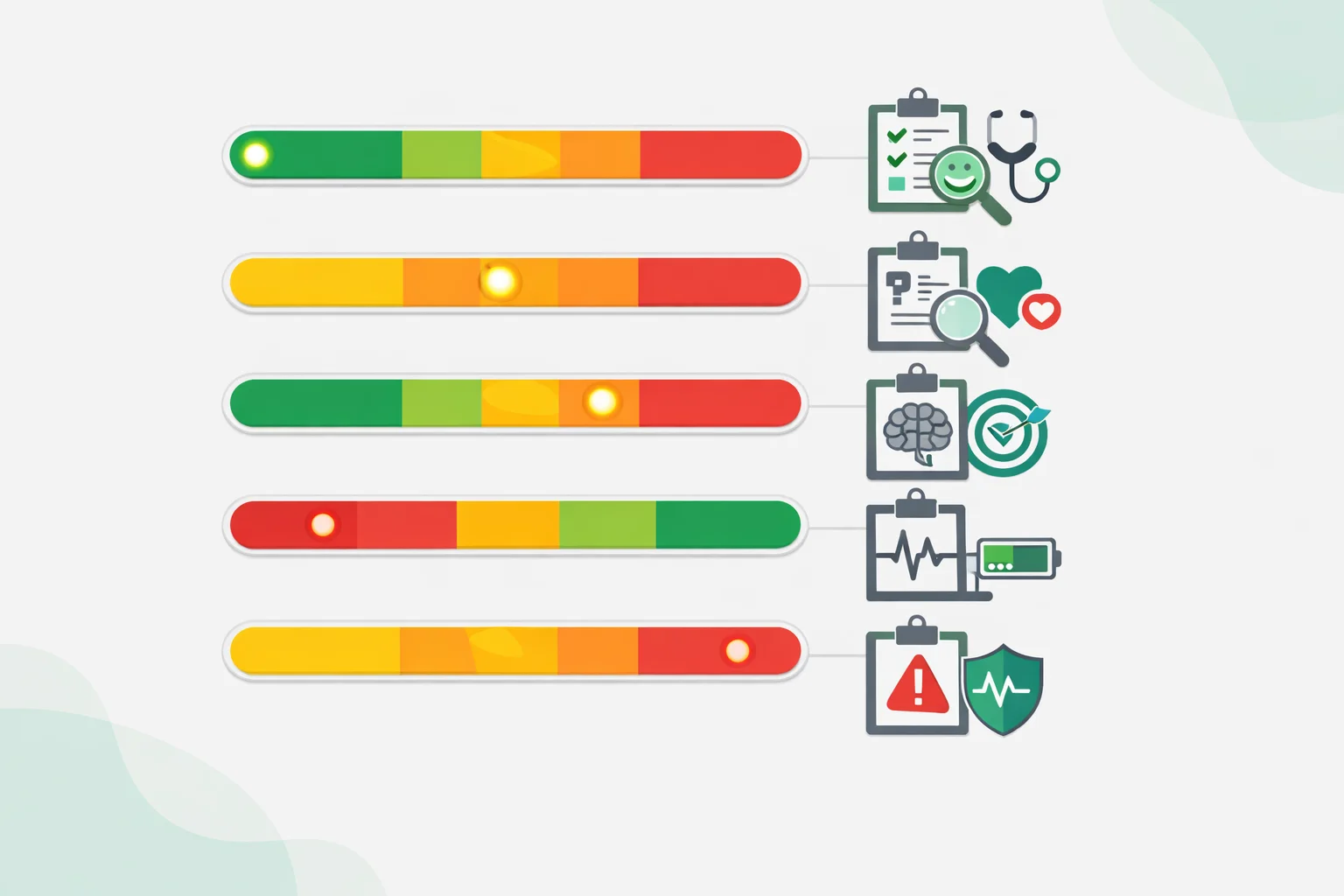
A good mental health quiz won't tell you what's wrong with you — and that's exactly what makes it worth taking. What it can do is something more useful than a label: it can take the vague, hard-to-name feeling that something is off and turn it into a direction. The check-in above does this by sampling five common areas at once, then handing you a single best next step instead of a diagnosis you'd have to second-guess anyway.
Why "What Mental Illness Do I Have?" Is the Wrong Question
It's one of the most-searched mental-health phrases on the internet, and it's built on a flawed premise. The phrasing assumes there's a single hidden answer waiting to be unlocked, like a diagnosis is a password. In reality, mental health doesn't sort neatly into one box per person. Symptoms cluster, overlap, and borrow from each other — the same tiredness can come from depression, burnout, poor sleep, or an under-active thyroid.
That's why a responsible mental wellness quiz reframes the question entirely. Instead of "which disorder am I," it asks "which area is loud enough to look at first?" A screening tool is a smoke detector, not a fire inspector. It's tuned to be sensitive — to catch the smoke early — which means it will sometimes beep when dinner's just a little burnt. The beep is an invitation to check, not proof the house is on fire. Getting that distinction right is the difference between a quiz that helps and one that hands strangers a label to spiral on.
Reading a Five-Area Result the Way a Clinician Would
When a clinician runs a battery of short screens, they don't read each one in isolation. They look at the shape of the whole profile — which areas are high, which are quiet, and how they relate. This check is built to give you that same shape. Each of the five areas maps to a well-established screening instrument, so an elevated bar isn't random; it's echoing a tool clinicians actually use.
| Area on your dashboard | Clinical tool it echoes | What an elevated score hints at |
|---|---|---|
| Low Mood & Lost Interest | PHQ-9 | Depressive symptoms |
| Worry & Tension | GAD-7 | Generalized anxiety |
| Focus & Restlessness | Adult ADHD Self-Report (ASRS) | Attention differences |
| Mood Swings & Energy | Mood Disorder Questionnaire (MDQ) | Bipolar-spectrum pattern |
| Stress & Overwhelm | Perceived Stress Scale (PSS) | Life load & burnout |
The trick to reading your result is to start at the top of the ranked list and work down. The highest bar is your first appointment's headline. A bar in the amber band means "watch and re-check"; a red bar means "worth a real conversation." And a wall of green doesn't mean you're fine by decree — it means none of these five patterns are shouting right now.
The Overlap Problem: When Two Areas Light Up at Once
Here's the part most online tests skip: comorbidity is the rule, not the exception. Roughly half of people who screen positive for depression also screen positive for anxiety, and the two feed each other in a loop — worry wrecks sleep, bad sleep flattens mood, low mood makes everything feel more threatening. So if both your mood and worry bars came back high, that's not necessarily two separate problems. It's often one underlying state showing two faces.
This is why the check ranks your areas instead of just flagging them. If mood and worry both flag, the deeper screen to start with is usually the higher one. You can always run the second. Many people find it clarifying to take both the depression quiz and the anxiety quiz back to back — the combination tells a more honest story than either score alone.
A Worked Example: Maya's Check-In
Picture a composite reader — call her Maya, 29, three months into a job she dreaded taking. She runs the check on a Sunday night. Her dashboard comes back like this: Stress in the red, Worry in the amber, Mood in the amber, and Focus and Energy both steady green. The naive read is "I have anxiety and depression." The clinical read is different.
Notice that her two highest bars share a story. The job is the obvious stressor; the worry and the dipping mood are riding on top of it, not running independently. Because Stress tops the list and her Energy and Focus are clean, the most likely picture isn't a mood disorder — it's a person under genuine, situational load whose mood and worry are responding exactly as you'd expect them to. Her smartest next step isn't a diagnosis; it's addressing the load, protecting sleep, and re-checking in two weeks. If the worry and mood bars stay high after the stressor eases, then the deeper screens earn their keep. Reading the shape, not just the spikes, is what keeps a quiz from becoming a self-diagnosis machine.
When the Quiz Says "Stress," Not "Disorder"
One of the five areas is deliberately not a disorder lane, and it's the one people most need permission to take seriously without panicking: Stress & Overwhelm. Feeling buried, snappy, and drained is real and it matters — but it's usually a signal about your circumstances, not your brain chemistry. Burnout responds to changes in workload, rest, and boundaries far more than to a diagnostic workup. Treating ordinary overwhelm like a medical condition can actually backfire, because it sends you hunting for an internal fix to an external problem.
The honest version of a mental health check has to be able to say "this looks like life, not illness." When stress is your top bar and the clinical areas stay quiet, that's not the quiz failing to find something — that's it correctly finding that the thing to change is the load, not you. Of course, stress that never lifts, long after the cause is gone, is worth a professional conversation too. The line is duration: a hard month is stress; a flat, hopeless quarter is worth screening.
Self-Screening vs Googling Your Symptoms
There's a reason "don't google your symptoms" became a cliché — and it applies double to mental health. A search engine returns the scariest plausible match, weighted by what's popular, not by what fits you. A structured screen does the opposite: it asks the same calibrated questions of everyone and scores them against a known scale, so your result reflects your answers rather than the internet's worst-case guess.
The catch is that a screen only knows the lanes it was built with. This one covers five of the most common, but it can't see trauma, grief, eating concerns, substance use, OCD, or autistic burnout — each needs its own tool. If alcohol has become the thing that smooths over the hard days, our alcohol use quiz screens that pattern directly. If your gut says the real issue is somewhere off this map, follow the gut. A restless, can't-finish-anything mind, for instance, sometimes points less at anxiety and more at attention differences, which is what the ADHD quiz is designed to untangle. The free screening library at Mental Health America covers several of the lanes this check can't.
All 5 Areas This Check Screens — and Where Each Points
🌫️ Low Mood & Lost Interest. This area tracks the two symptoms at the core of depression: persistent low mood and a fading interest in things that used to bring pleasure. An elevated bar here is the most important to follow up on, because depression is both common and very treatable once it's named. The next step is the PHQ-9-based depression screen, which goes deeper on sleep, energy, and self-worth.
🌀 Worry & Tension. Worry you can't switch off, paired with physical tension like a racing heart or restlessness, is the signature of generalized anxiety. A high score here doesn't mean you're "an anxious person" — it means the last two weeks carried more worry than the situations warranted. The GAD-7-based anxiety quiz tells you whether it's crossing the threshold where help makes a clear difference.
⚡ Focus & Restlessness. Trouble concentrating, half-finished tasks, and a mind that hops between topics can signal attention differences — but they also overlap heavily with anxiety and low mood, which is why this lane is the trickiest to read alone. If it's your top bar and the others are quieter, the adult ADHD screen is the place to untangle it.
🎢 Mood Swings & Energy Shifts. Mood and energy that swing on their own internal clock — especially wired, low-sleep highs followed by crashes — are the pattern a bipolar-spectrum screen is built to catch. People are far better at noticing their lows than their highs, so this is the area most often missed in self-assessment. An elevated score is worth taking to the bipolar disorder quiz and then a professional.
🔥 Stress & Overwhelm. The non-disorder lane. Feeling overwhelmed, irritable, and drained is usually about life load rather than brain chemistry, and it responds to rest, boundaries, and support more than to a diagnosis. A high stress bar with everything else green is one of the most reassuring results this check can give — it points at your circumstances, not a condition.
What to Actually Do With a Flagged Result
Start with the top of your ranked list and do exactly one thing: take the single screening it points to, or — if stress topped it — change one piece of your load this week. Resist the urge to take all five deep-dives in a panic; that turns a useful signal into a spiral. If a bar sat in the red, write down how long the symptoms have lasted and bring that number to a doctor or therapist, because duration is the detail clinicians ask for first. For a calm, jargon-free overview of any area that flagged, the National Institute of Mental Health is a reliable place to read more.
And hold onto the one rule that overrides every bar on your dashboard: if something feels seriously wrong, trust that instinct over any score. A quiz can point you toward a door. Walking through it — calling a professional, a trusted person, or 988 if you're in crisis — is the part that actually changes things.