How Kyber Crystals Choose Their Jedi (And Why That Idea Feels So Real)
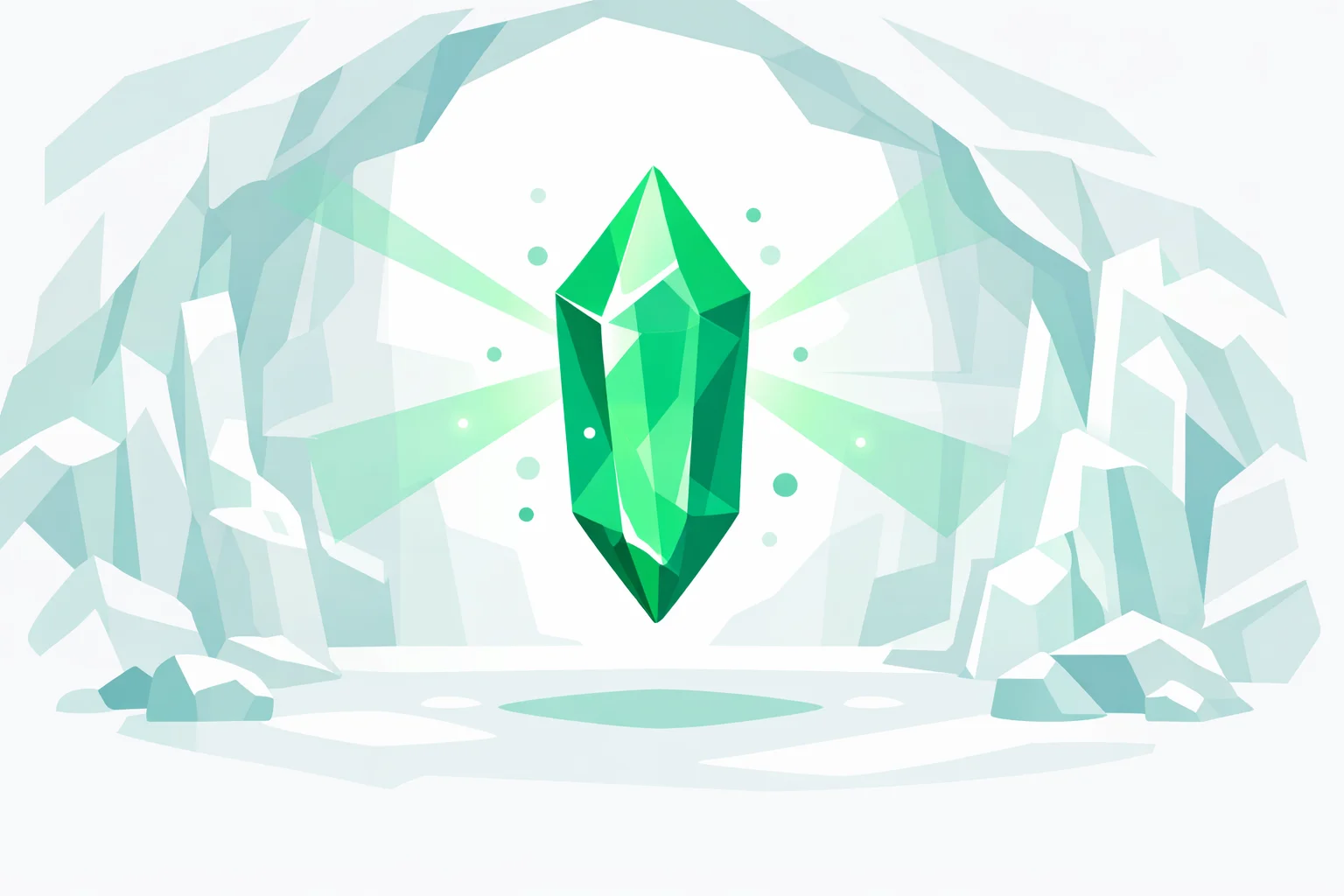
Why does a kyber crystal quiz feel more satisfying than picking your favorite blade color off a list? Because being chosen and choosing are two completely different psychological events, and Star Wars built an entire ritual around the gap between them. A youngling doesn't browse the Crystal Cave. They walk in, and something in the ice either answers or it doesn't.
That distinction isn't just good worldbuilding. There's a well-documented reason the phrase "it chose me" sticks to people in a way "I picked it" never does — and once you know what that reason is, the Gathering reads less like a fairy tale and more like a very old piece of applied psychology.
Why Being Chosen Beats Choosing
In 2007, Nicholas Epley, Adam Waytz and John Cacioppo published a paper in Psychological Review laying out a three-factor theory of anthropomorphism — an explanation of when and why humans assign minds to things that don't have one. The factor that matters here is effectance motivation: we're far more likely to treat an object as an agent when we badly want to make sense of something unpredictable. Give a person an uncertain future and a silent rock, and the rock starts having opinions.
A crystal that chooses you does something a crystal you chose cannot. It converts a decision into a verdict. That's why fandom keeps generating "which one am I" formats and why they outlive the media that spawned them.
Here's the wrinkle, though. Consumer research usually points the other way. Michael Norton, Daniel Mochon and Dan Ariely's work on the IKEA effect found that people value things more when they built them personally — labor creates attachment. Kahneman, Knetsch and Thaler's classic endowment-effect experiments showed people demanding roughly twice as much to give up a mug as they'd have paid to acquire the same mug minutes earlier. Both findings say involvement raises value.
The kyber story inverts that and somehow lands harder. You didn't build it and you didn't buy it, and that's precisely the appeal — a bond you can't take credit for is also a bond you can't be blamed for wanting. It's a socially permitted way to say something flattering about yourself.
The Gathering: One Cave, Until Sundown
The ritual gets its clearest screen treatment in the 2012 Clone Wars episode "The Gathering," where a group of younglings travels to Ilum with Ahsoka Tano and the architect droid Huyang. The Crystal Cave is sealed under ice. Focused sunlight melts the entrance open, and when the sun moves on, the ice reseals — anyone still inside stays until the next thaw. There is no second attempt that day and there is no adult coming in after you.
The clever part is that each youngling fails in a way that's specific to them. Petro's arrogance leaves him grabbing at a crystal that isn't his. Katooni nearly runs out of time because she doesn't believe she deserves one. The cave isn't a test of Force strength; it's a test of whether you can get out of your own way for a few hours.
And the crystals themselves are colorless going in. Color only appears once the bond has formed and the saber is built — which is the single most-missed detail in this corner of Star Wars lore, and the reason this quiz scores for the bond rather than the blade.
From Kaiburr to Kyber: A 48-Year Retcon
None of this arrived fully formed. The idea has been rebuilt roughly every decade since 1978, and the version fans treat as timeless canon is barely a teenager.
| Year | Where it appeared | What changed |
|---|---|---|
| 1978 | Splinter of the Mind's Eye | The "Kaiburr crystal" debuts in Alan Dean Foster's novel as a Force-amplifying relic. Nothing to do with lightsabers at all. |
| 1990s–2000s | Legends novels and the KOTOR-era games | Crystals become saber components. Game mechanics tie color to role — blue Guardian, green Consular, yellow Sentinel — a rule fans still quote as canon even though it never was. |
| 2012 | The Clone Wars, "The Gathering" | The ritual is dramatized on screen. The crystal chooses the Jedi becomes an explicit rule. |
| 2016 | Rogue One | Kyber goes industrial. The Empire strip-mines Jedha's crystals to power the Death Star superlaser — the same substance, weaponized at planetary scale. |
| 2016–2017 | Ahsoka (novel) and the Vader comics | Bleeding and purification enter current canon, which finally explains white blades. |
| 2019 | Savi's Workshop, Galaxy's Edge | Guests physically select a crystal and build a saber around it. The ritual becomes a purchase. |
That last row is quietly funny. The most famous rule in kyber lore is that you don't get to pick — and the most popular real-world expression of that lore is a counter where you pick. Fans made their peace with it fast, which tells you the myth was always more about permission than about mechanics.
What a Crystal Quiz Measures That Color Can't
A color quiz asks what your blade looks like. This one asks how the bond happened, which turns out to be a much more revealing question. The 18 questions above score three axes:
- Instinct — how quickly you commit before the information is complete. High scores go to people who treat action as a way of gathering data.
- Restraint — how long you can sit with an unresolved thing. This is the axis that separates the Silent Crystal from the First-Light Crystal despite similar devotion scores.
- Devotion — how much of your decision-making is other-directed. It's the loudest signal in the Sentinel and Heartstone results.
Every answer awards three points to a primary bond and one to an adjacent one, so no single question can lock your result. That matters on question 8 and question 12, where the honest answer is often the uncomfortable one and a one-question-decides-everything design would punish honesty.
One more design detail, because most quizzes get it wrong: the four answers on every question are deliberately shuffled so that no bond sits in the same slot twice in a row. It sounds trivial. It isn't. When we first built this, the First-Light option happened to land in position one on all nine of its questions, and anyone with a habit of picking the top answer got funnelled straight to it — the gap between the most and least likely result was 26 percentage points. After shuffling, that gap is three. If a quiz result ever feels suspiciously like the obvious answer, this is usually why.
If you want the color instead, the lightsaber color quiz scores directly for blue, green, purple, red, yellow, white and the Darksaber with an entirely different question set. Take both and compare — most people find the crystal result is the one that stings slightly.
Here's Where It Gets Dark
Canon has a name for forcing a bond the crystal didn't offer. It's called bleeding, and it works exactly the way it sounds: a Force user pours rage and pain into the crystal until it stops resisting, and the crystal turns red. Charles Soule's 2017 Vader comics made this explicit and unpleasant — the crystal is described as crying out.
Purification is the reversal, and it's much rarer. Ahsoka Tano takes crystals from a fallen Inquisitor and heals them, which is where her white blades come from. Read the two processes side by side and you get a surprisingly sharp piece of moral machinery: bleeding is a bond taken by force, purification is one restored by patience, and both cost the wielder something real.
That's why the Bled Crystal result in this quiz isn't a villain ending. It goes to people whose answers show they impose rather than yield when the two collide — the same trait that reads as decisive leadership in a crisis and as steamrolling in a relationship. If that landed uncomfortably close, the D&D alignment quiz is a useful second opinion, because it separates method from motive in a way this quiz deliberately doesn't.
Kyber vs. Wands vs. Visions
Fiction is full of objects that pick their owner, and they don't all mean the same thing. Lining them up makes the kyber crystal look genuinely unusual:
| Object | Who does the choosing | What it says about you | Can it be undone? |
|---|---|---|---|
| Kyber crystal | The crystal, through resonance | How you handle pressure and other people | Yes — bleeding and purification both rewrite the bond |
| Ollivander wand | The wand, on contact | Temperament, matched to wood and core | Partly — allegiance transfers if the wand is won |
| Genshin Vision | A god, in exchange for an ambition | What you want badly enough to be granted power for | Yes, but only by the god who gave it |
| Sorting Hat | You, sort of — it negotiates | What you value, plus what you ask for | No, though the hat says the choice mattered |
| The Triforce | Nobody — it audits and splits | Which of three virtues you hold most, by measurement | Only by reuniting all three pieces |
The kyber crystal is the only one on that list where a bond can be corrupted by a third party and then repaired by a fourth. A wand switches allegiance; a crystal gets damaged and healed. That's a meaningfully different metaphor, and it's why two of the eight results here are about recovery rather than identity. The Triforce is the coldest entry on the list, incidentally — it doesn't choose anyone in the sense the others do. It checks whether your heart holds Courage, Wisdom and Power in balance, and when it doesn't, it simply breaks apart and distributes the pieces to whoever matched them best, which is the mechanic the Legend of Zelda character quiz scores on directly. If you want the version where the object grants power for an ambition instead, the Genshin element quiz runs on exactly that logic, and the Harry Potter wand quiz covers the Ollivander approach.
All 8 Kyber Crystal Results Explained
The percentages below aren't decoration. Before this quiz went live we ran the scoring across 200,000 simulated answer sets to check that every bond was actually reachable and that no single result was quietly swallowing the others. Two things fell out of that. The first is that the numbers you see are measured, not invented. The second is genuinely counterintuitive: the Purified Crystal is the rarest bond in canon and the most common result here.
⚡ The First-Light Crystal (14%) — answered within minutes because you moved before you had a plan. You commit early and reason on the way, which makes you outstanding in a crisis and occasionally the loudest voice defending a position you adopted four seconds ago. Blue blade. The weak point is mistaking momentum for direction.
🌘 The Silent Crystal (13%) — wouldn't be found by searching, only by stopping. High restraint, low urgency, and a habit of holding the useful information nobody thought to ask for. Green blade. Your risk is that waiting is also a decision, and some doors close while you're still assessing them.
🩶 The Cracked Crystal (13%) — already fractured when it called to you, because you know what working while broken feels like. This is the rare profile with high restraint and low fear: careful from experience rather than anxiety. Unstable, flickering blade. The trap is entering rooms braced for a fight that isn't coming.
🔥 The Bled Crystal (10%) — resisted, and you held on anyway. Low restraint, low yield, and a consistent preference for owning a bad outcome over inheriting a good one. Red blade. Powerful in a crisis, expensive in a partnership, and prone to confusing winning the argument with being right.
🤍 The Purified Crystal (15%) — the rarest bond in canon and the most common one here. It belonged to someone else first and it was damaged before it reached you. High restraint plus high devotion produces the person who says the difficult thing once, calmly, years late, and then genuinely moves on. White blade. The cost is carrying other people's damage and calling it patience.
🛡️ The Sentinel Crystal (12%) — chose the one who covers the exit nobody is watching. Devotion is your top axis by a distance, and it shows in the unglamorous answers rather than the heroic ones. Yellow blade, the Temple Guard color. Your blind spot is that nobody relieves a guard who never asks to be relieved.
🌀 The Wandering Crystal (11%) — traded, lost and found again, and it recognized someone who refuses to be one fixed thing. You treat rules as terrain and identity as a draft, which makes you impossible to trap and hard to pin down. Shifting bronze blade. The catch is that keeping every option open is itself a way of never choosing.
💜 The Heartstone (12%) — one of the deep, ancient crystals that amplifies instead of performing. High devotion and high restraint with moderate instinct: the stabilizer, not the driver. Purple blade, in the Kaiburr tradition. The danger is building something that cannot afford for you to have a bad year.
What Your Crystal Is Asking You to Do
Every one of these results is really a question about a single axis you have dialed too far in one direction, so look at which of your three bars came back tallest rather than at the number itself. If it's Instinct, your assignment this month is to leave one decision unmade for 48 hours and notice that nothing collapses. If it's Restraint, pick the thing you've been researching and just start it badly. If it's Devotion, ask someone for something before they offer — that is the exact move the Sentinel and Heartstone profiles never make on their own.
And if you got a result you didn't like, retake it in six months rather than right now. Crystals get re-bonded in canon all the time. That's the whole point of the mechanic — you are not the person who walked into that cave, and the thing in your hand is supposed to change with you. If you'd rather see which character in the galaxy shares your particular set of instincts, the Star Wars character quiz reads the same answers through a completely different lens.