The Wandmaker's Secret: How Wand Woods, Cores, and Lengths Actually Work
The Harry Potter wand quiz you just took asks something deceptively simple: what wand would choose you? But behind that question sits one of the deepest pieces of worldbuilding J.K. Rowling ever created — a system of wandlore so detailed that most fans only scratch the surface. You step into Ollivanders on Diagon Alley and see dusty shelves stacked floor to ceiling, thousands of narrow boxes, a strange old man measuring between your nostrils — and somehow, out of all those wands, one responds to you. Why that one? That's what Ollivander spent his entire life trying to understand, and it's what this article unpacks.
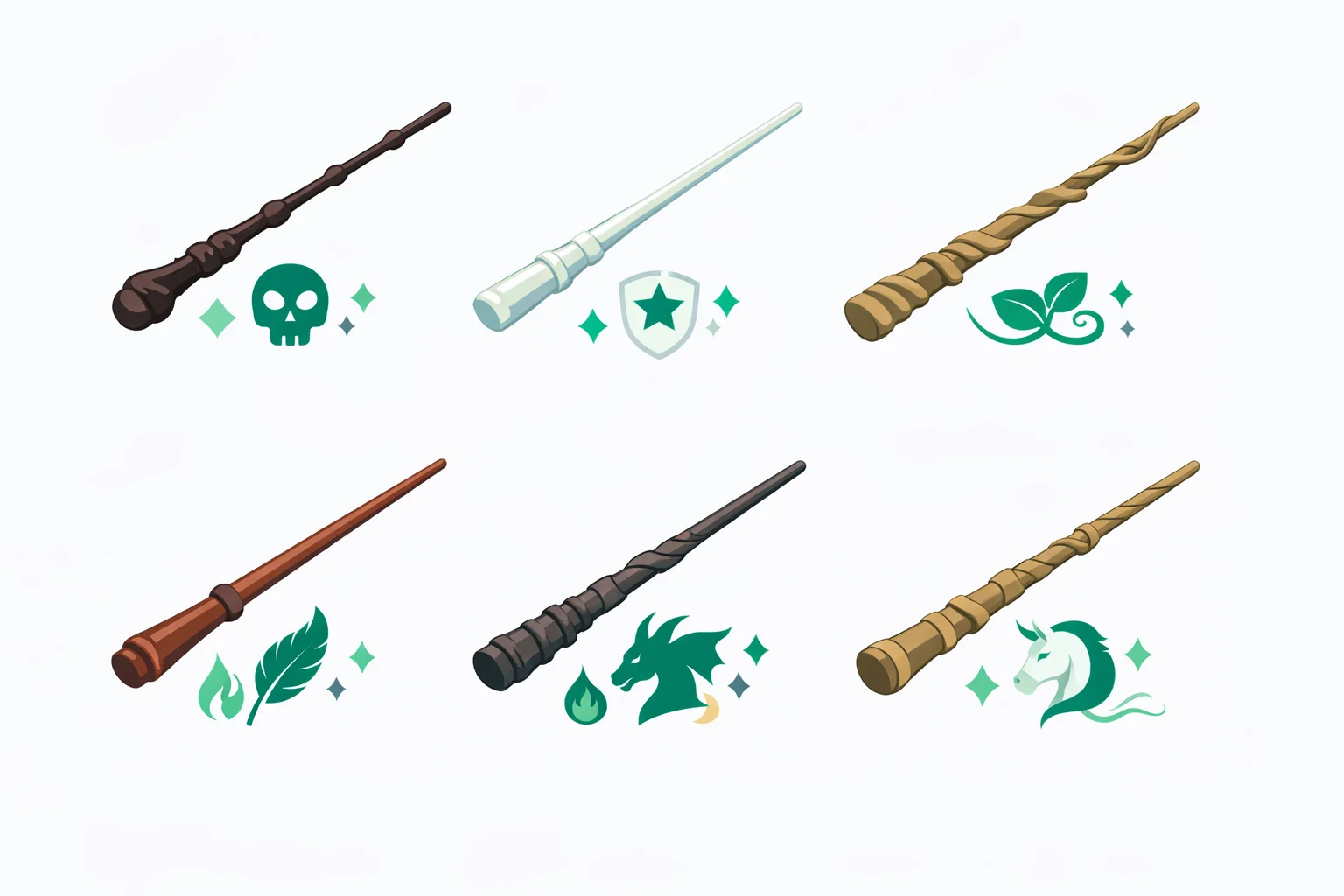
What Ollivander Never Told You About Wand Selection
Here's what most people miss about wandlore: Ollivander didn't invent it. He inherited a tradition stretching back to at least the 4th century BC, when European wandmakers first began noticing that certain woods responded differently to different wizards. The Celtic Ogham alphabet — a real historical writing system — assigned mystical properties to 20 different trees, and many of Rowling's wand wood descriptions map directly onto those ancient associations. Holly was the tree of warriors and kings. Elder was the tree of death and transformation. Yew guarded graveyards for millennia before Voldemort ever touched one.
What Ollivander added was systematic testing. He and his family spent generations cataloging which personality traits correlated with which woods, which cores, and which combinations worked — or exploded. His private notes, which Rowling published in fragments across Pottermore between 2012 and 2015, reveal a wandmaker who was genuinely uncertain about some of his own conclusions. He admits that hawthorn "has a curious dual nature" that he still doesn't fully understand after decades of observation.
Where Do Wand Wood Personalities Come From?
Every wand wood in the Potter universe carries a distinct personality — not in a metaphorical sense, but literally. Wands are semi-sentient. They choose. They refuse. Sometimes they rebel. Ollivander categorized woods along several dimensions: who the wood tends to select, what magic it excels at, and how it behaves when paired with specific cores. It's this three-dimensional matching that makes wandlore genuinely complex rather than a simple personality-to-wood lookup table.
Rowling wasn't working alone here, either. The chosen-by-an-object idea shows up across modern fantasy, and the closest sibling is the kyber crystal — Star Wars runs almost the same mechanic with one crucial difference: a wand's allegiance transfers when it's won in a duel, while a crystal can be corrupted by one person and healed by another. If that distinction interests you, the kyber crystal quiz scores for eight bond types built on that exact idea, and it makes a genuinely interesting comparison against your wand result.
Take holly, for instance. Rowling wrote that holly "is one of the so-called rare woods" that performs best when paired with a phoenix feather core — and poorly with many others. Harry's wand (holly and phoenix feather, 11 inches) was powerful not just because of who Harry was, but because the wood-core pairing itself was unusually harmonious. In contrast, holly paired with dragon heartstring tends to produce an unpredictable wand that fights its owner during complex spellwork. The system has internal rules that fans rarely dig into.
If you're curious how your personality maps beyond your wand, try our Hogwarts House Quiz — there's significant overlap between wand wood temperaments and house traits. Holly owners skew heavily Gryffindor, while hawthorn owners split almost evenly between houses.
The Three Supreme Cores — And Why Ollivander Refuses All Others
Ollivander uses exactly three core materials: phoenix feather, dragon heartstring, and unicorn hair. Other wandmakers — like Gregorovitch in Eastern Europe — use Veela hair, Thestral tail hair, and even Kneazle whisker. But Ollivander considers these inferior, and his reasoning is fascinating. He calls his three "the Supreme Cores" not because they're the most powerful individually, but because they produce the most predictable and reliable wands. Veela hair cores, for example, make temperamental wands that fluctuate wildly based on their owner's emotional state. Ollivander viewed that as a design flaw, not a feature.
The exception proves the rule: the Elder Wand's core is Thestral tail hair — a material Ollivander would never use. That wand was made by Death himself (or, more practically, by Antioch Peverell in the 13th century), and its unstable allegiance pattern — constantly seeking a more powerful master — is exactly the kind of behavior Ollivander's three-core system was designed to avoid.
| Core | Strengths | Weaknesses | Dark Magic Risk |
|---|---|---|---|
| Phoenix Feather | Widest range of magic, most autonomous | Slowest to bond, can act independently | Moderate — follows the wizard's intent |
| Dragon Heartstring | Most powerful, fastest learner | Most accident-prone, shifts allegiance | Highest — amplifies without filtering |
| Unicorn Hair | Most consistent, most faithful | Least raw power, can "die" if misused | Lowest — naturally resists dark magic |
Worth remembering that Ollivander's three-core rule is a British rule, not a law of magic. American wandmakers ignored it completely: Shikoba Wolfe worked in Thunderbird tail feather, Johannes Jonker in Wampus cat hair, Thiago Quintana in Horned Serpent heartstring, and Violetta Beauvais in rougarou hair. Three of those four creatures are also the houses of Ilvermorny, which is why your core often predicts your Ilvermorny house more accurately than any Hogwarts sorting does.
Does Length and Flexibility Actually Matter?
Short answer: more than you'd think. Ollivander's notes describe wand length as roughly correlated with the wizard's height and personality "stature" — not physical confidence, but the sheer scale of their presence. Hagrid's broken wand was 16 inches. Umbridge's was an unusually short 8 inches. Rowling clearly used length as a character signal, even if she never said so explicitly.
Flexibility is subtler and, according to Ollivander, indicates "the degree of willingness to adapt and change" in the wand-and-owner pair. A rigid wand doesn't mean a stubborn wizard — it means a wizard whose convictions are load-bearing. They can't afford to be flexible because too much depends on their consistency. Bellatrix Lestrange's walnut and dragon heartstring wand was described as "unyielding" — a terrifying combination given her fanaticism. Draco's hawthorn wand, by contrast, was "reasonably springy," reflecting a boy caught between competing loyalties who hadn't yet decided who he was.
How the Scoring Behind This Wand Quiz Works
Unlike quizzes that assign a single personality type, our wand quiz uses a combination matching system — four parallel scoring tracks that independently determine your wood, core, length, and flexibility. Your first six questions map to wand wood based on how you handle moral dilemmas, curiosity, conflict, and fear. Questions seven through ten evaluate your core based on emotional patterns — how you process competition, injustice, and setbacks. The final five questions determine length and flexibility based on your social energy and your relationship with change.
This approach means your wand is genuinely unique. With 8 woods × 3 cores × 3 lengths × 4 flexibilities, there are 288 possible wand combinations — far more than most sorting quizzes offer. Your result isn't one of four buckets. It's a specific artifact that reflects the interplay of multiple personality dimensions.
The Most Famous Wand Matchups in Canon (and What Went Wrong)
Ron’s broken wand creates a different kind of mismatch: Lockhart’s attempted Memory Charm backfires on its caster. The spell incantations challenge tests that scene alongside the distinction between what a spell is meant to do and what happens when someone uses it.
The most important wand matchup in the entire series — Harry's holly-phoenix wand versus Voldemort's yew-phoenix wand — worked so perfectly as narrative because the wandlore actually makes sense. Both wands contained feathers from Fawkes, making them "brothers." Holly is the protector's wood; yew is the dueler's wood. The same core material channeled through opposite temperaments. When the wands met in the graveyard in Goblet of Fire, Priori Incantatem forced them to reveal their histories — a phenomenon Ollivander had documented but never personally witnessed.
Then there's Neville. He spent his first five years at Hogwarts using his father Frank's wand — a wand that had never chosen him. His magic was unreliable, his confidence was shattered, and everyone assumed he was simply a weak wizard. When he finally received his own wand (cherry and unicorn hair, 13 inches), his abilities transformed almost overnight. If your Patronus Quiz result surprised you, consider that Neville's entire character arc hinged on having the wrong wand for five years.
The lesson wandlore actually teaches is uncomfortable: compatibility matters more than raw power. The Elder Wand — the most powerful wand ever made — lost to Harry's modest holly wand because allegiance trumped firepower. A wand that loves you will outperform a wand that merely tolerates you.
All 8 Wand Wood Results
Here's every wand wood you could receive in this quiz, with the core traits that triggered the match. Compare yours with friends — it's surprisingly rare for two people to share the same wood-core combination.
🌿 Holly — The protector's wood. Chosen for those with deep moral conviction who act decisively in defense of others. Holly is one of Ollivander's rarest woods and pairs best with phoenix feather. If you got holly, you're someone people trust instinctively in a crisis — and that trust isn't misplaced.
⚡ Elder — The master's wood. The rarest result, given only to those whose ambition is backed by genuine substance. Elder wands demand exceptional talent and a personality that doesn't flinch from power. Most wandmakers refuse to work with elder entirely — your match with it says something significant.
🌳 Oak — The steadfast companion. Oak owners are loyal to their core, with a quiet strength that becomes obvious only when it's tested. Ollivander wrote that oak demands "strength, courage, and fidelity" — not the loud kind, but the kind that holds when everything else breaks.
🍇 Vine — The seeker's wood. Vine wands find those with hidden depths and ambitious vision. If vine chose you, you probably surprised yourself with this result — which is exactly the point. Vine owners see patterns and possibilities that others can't.
🌾 Willow — The healer's wood. Willow selects the quietly gifted — people with enormous untapped potential who often underestimate themselves. Growth is the central theme. If willow chose you, your best magic is ahead of you, not behind you.
🖤 Yew — The dueler's wood. Yew carries a fierce reputation but chooses wizards with the power to protect and curse equally. Don't mistake yew for darkness — Ginny Weasley also carried a yew wand. It signifies intensity and a refusal to be passive.
🌸 Hawthorn — The paradox wood. Hawthorn finds those in the middle of becoming someone new — people whose contradictions are a feature, not a bug. Draco Malfoy's hawthorn wand reflected his internal conflict between loyalty to his family and his own emerging moral compass.
🌸 Cherry — The rare bloom. Cherry wands demand discipline and inner strength, highly prized at the Japanese wizarding school Mahoutokoro. Neville's cherry wand — his own, not his father's — unlocked his true potential. Cherry owners are precise, patient, and far more dangerous than they appear.
Your Wand Chose You — Now What?
The real insight from wandlore isn't "what wood am I" — it's understanding why specific combinations click. If you got holly and phoenix feather, you share a wand profile with Harry Potter, and Ollivander would tell you that combination produces wands of remarkable protective power. If you got yew and dragon heartstring, you're carrying a wand built for dueling — not because you're aggressive, but because you refuse to back down when something matters. Send your result to a friend and compare. The Lightsaber Color Quiz uses similar personality-to-artifact matching from the Star Wars universe — some people find their lightsaber result eerily consistent with their wand.
One last thing Ollivander knew that most fans forget: wands grow with their owners. A wand that chooses you at seventeen won't necessarily be your ideal match at forty. The wood stays the same, but the relationship deepens. Your wand didn't just choose you for who you are today. It chose you for who you're becoming. If you want to see which canonical character shares your behavioral patterns — not just your wand affinity — our Harry Potter character quiz matches you across 10 characters using a weighted five-dimension model.