Best Friend Quiz: Create a Custom Quiz to Test Your Friendship
Two hundred hours. That's roughly how long it takes to turn someone into a best friend, and this best friend quiz is built to test whether all those hours actually stuck. A 2018 University of Kansas study tracked how friendships form and found that hitting "best friend" status takes around 200 hours of time together — but clocking the hours and actually knowing someone's tiny, specific quirks are two very different things. That gap is exactly what you're about to measure.
It Takes 200 Hours to Build a Best Friend
Jeffrey Hall, the communication researcher behind that Kansas study, didn't just land on one magic number. He mapped a whole staircase of how strangers become friends, and the hours add up faster than you'd think — until they don't. The jump from "friend" to "best friend" is the steepest climb of all.
| Hours spent together | Where the friendship lands | What changes |
|---|---|---|
| ~50 hours | Acquaintance → casual friend | You'd grab coffee, but you don't text for no reason yet |
| ~90 hours | Casual → real friend | You make plans on purpose and share actual opinions |
| ~200 hours | Friend → best friend | You know their weird habits, their order, their tells |
The reason that last row matters here: 200 hours buys you access to the small stuff — the comfort food, the guilty-pleasure playlist, the toxic trait they'd only admit at 1am. A friendship quiz that only asked "what's my favorite color" would tell you nothing. The questions in this one are deliberately specific because specificity is what separates a real best friend from a friendly acquaintance.
Why Do Close Friends Still Miss the Little Stuff?
Here's the uncomfortable part. Feeling close to someone and being accurate about them are not the same skill. Researchers studying couples have repeatedly found what's sometimes called the "illusion of insight" — we assume that because we love someone, we automatically understand their preferences. Then we get tested, and the score humbles us. Long-married partners routinely misjudge each other's specific tastes, and best friends are no different.
Two things drive the misses. First, tastes drift. The coffee order from three years ago got swapped for an iced oat-milk thing nobody announced. Second, we build a mental snapshot of a friend early on and quietly stop updating it. The quiz is sneaky-good at catching this because it asks about the present tense — what they reach for now, not who they were when you met. If you want to see this same effect inside a romantic bond, the couples quiz runs the identical experiment with a partner instead of a friend.
How the Score Is Built (and Why It's Shareable)
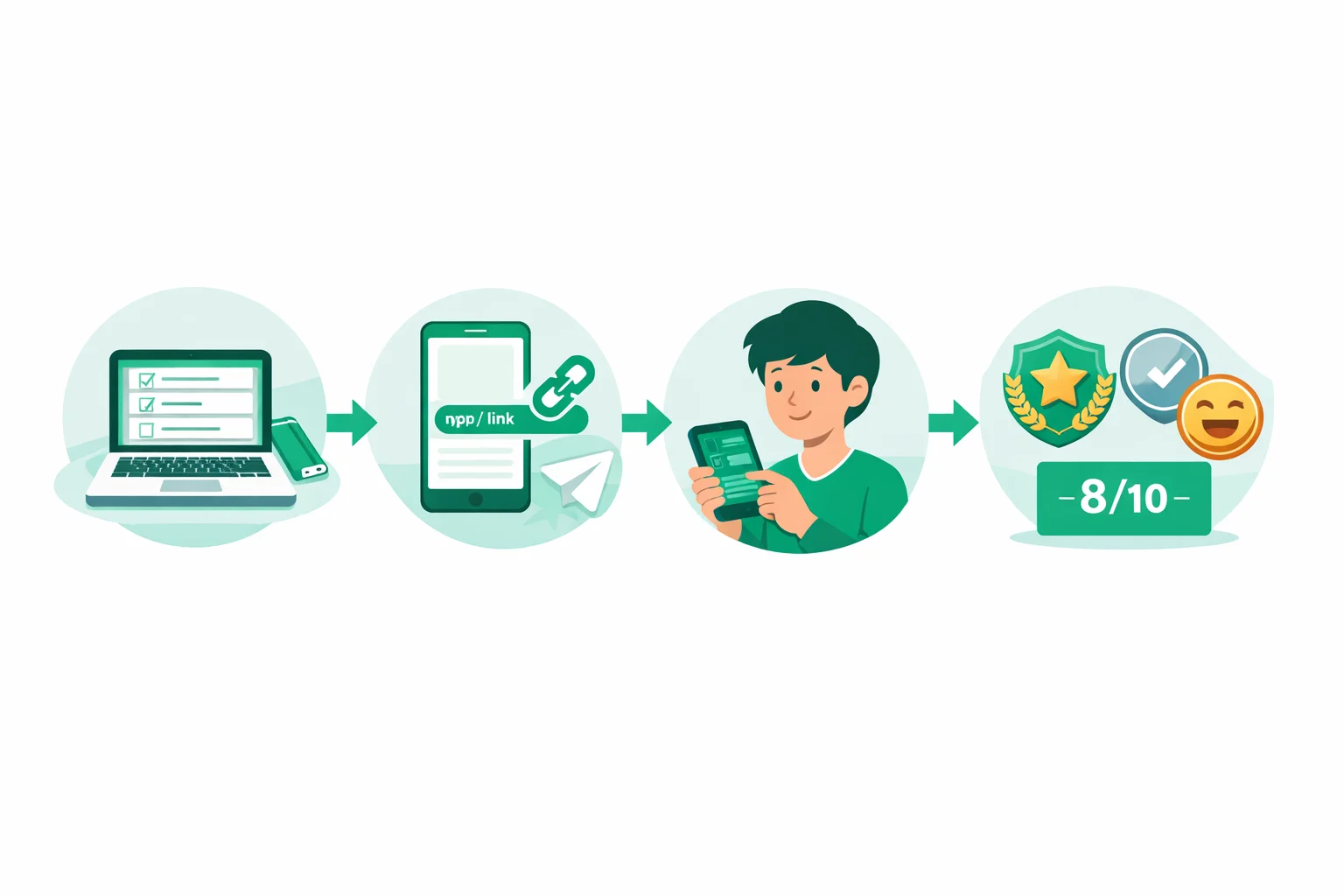
Most online quizzes guess things about you. This one flips it. You answer 15 questions about yourself and lock in your real answers. Those answers get packed into a link — not stored on any server, just encoded right into the URL — so when you drop that link in the group chat, your friends are scored against the genuine source of truth: you.
Scoring is refreshingly honest: one point per question your friend nails, out of 15. There's no weighting, no personality math, no "you're a 73% match" fuzziness. Either they knew your comfort food was mac and cheese or they didn't. That bluntness is the whole appeal — it turns a quiet hangout into a low-stakes competition, and competition is what makes people send a quiz to six friends instead of one.
What Your Friendship Score Actually Tells You
A score on this best friend quiz is really a measure of attention, not affection. Someone can adore you and still bomb the music question because they've never once asked what's in your headphones. So read the number generously. Landing 11 or higher out of 15 is genuinely impressive — it means your friend tracks the moving parts of your life, not just the highlight reel.
The middle of the range, roughly 8 to 10, is where most real friendships sit, and it's not a failing grade. It usually means someone has the headlines down but missed a few details that quietly changed. The fun isn't in the perfect score — it's in the three they got wrong, because each wrong answer is a tiny conversation waiting to happen. How friends show care also varies; some people express it through time, others through gifts or encouragement, which is the whole idea behind the love language quiz.
The Questions Friends Blow Most Often
After watching how these guessing games play out, a few questions trip people up far more than others — and they're almost always the ones about change, not character.
- The coffee order. People remember the version of your order from when you first became friends. Switch from sugary latte to plain black and watch even close friends guess wrong.
- The toxic trait. Friends tend to project the flaw that annoys them most, not the one you'd actually pick. The mismatch here is often the funniest reveal in the whole quiz.
- The stress response. Whether you talk it out or disappear is something friends rarely observe directly, because by definition you're hiding when you do the second one.
- The guilty-pleasure music. Nobody broadcasts this, so it's a near-coin-flip even for people who've known you a decade.
If your friend aces the easy favorites but whiffs every "hidden" question, that's a useful signal: you've got a great surface-level friendship that hasn't gone deep yet. Whether that pattern feels comfortable or frustrating can trace back to your own wiring, which the attachment style quiz digs into.
All 5 Friendship Score Tiers, Explained
Every score lands your friend in one of five tiers. Here's what each one really says about the friendship behind the number.
🫂 Soulmate-Level BFF (14–15 correct). This is the rare air almost nobody reaches. Getting 14 or 15 means your friend has memorized the trivial details most people never bother to notice — the irrational fears, the exact comfort food, the texting tics. It reads as borderline telepathy and usually only happens after years of genuine, attentive closeness.
💛 Certified Best Friend (11–13 correct). Only about one in five people pull this off. Your friend knows you inside and out, big things and small. The handful they missed are the fun ones to argue about later — proof there's always a little more of you left to discover.
🤝 Solid Friend (8–10 correct). This is right around the average, and it's a good place to be. Your friend has the headlines and a healthy chunk of the details, but a few favorites have quietly shifted since you last compared notes — the perfect excuse for a long overdue catch-up.
🌱 Still Getting to Know You (4–7 correct). Common for newer friendships. There's real warmth here, but the mental picture is running a few updates behind. Every wrong guess is just a question your friend now gets to ask, and that's exactly how close friendships get built in the first place.
🙃 Plot Twist: Total Stranger (0–3 correct). Either you're brand-new friends or someone's been keeping secrets. Don't panic — the lowest scores make the best group-chat screenshots, and you now have a ready-made list of 15 things to talk about.
So You Got Your Score — Now What?
Don't let the number just sit there. The most fun part of any best friend quiz is the argument that comes after, so screenshot the reveal and walk through the misses out loud. Ask your friend why they guessed black coffee when you're an energy-drink person — the wrong answers say as much about your friendship as the right ones.
Then flip it. Take the same link your friend used, but make your own quiz and send it back so they can test how well you know them. The friendships that last aren't the ones that ace every question on the first try — they're the ones where both people keep updating their mental map of each other, year after year. A quiz can't build that for you, but it's a genuinely good excuse to start.
Sources: Hall, J. A. (2018), "How many hours does it take to make a friend?", Journal of Social and Personal Relationships; background on friendship-group size from Dunbar's number.