The Marriage Market Was Real, and the Bridgertons Break Every Rule of It
Roughly 1,000 women were presented at court in a busy London season, and the number of eligible titled bachelors they were competing for sat closer to 400. Any Bridgerton quiz that treats the ton as a fairy tale misses what those two numbers do to people. The marriage market was a real institution with real arithmetic, and every one of the eight Bridgerton siblings is written as a different strategy for surviving it.
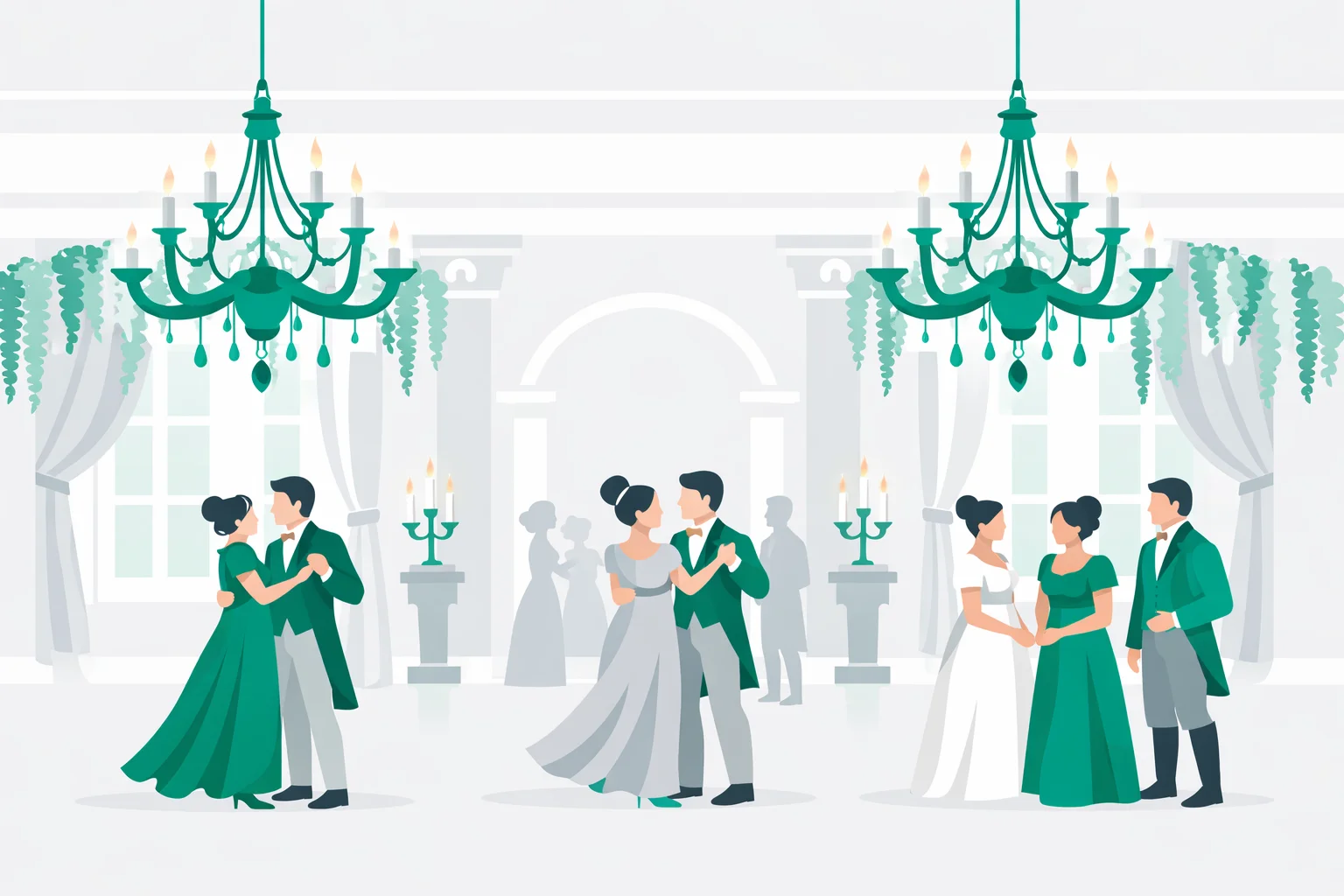
The Marriage Market Ran on Arithmetic
Here is the part the pastel costuming softens. A woman's season had a shelf life of about three years. Miss it and the term applied was “on the shelf” — not a joke, a category with financial consequences, because unmarried daughters remained a charge on an estate that legally could not be left to them. English primogeniture sent the title, the land and the income to one son. Everyone else in the family was, in a very literal sense, an expense.
That single legal fact generates most of the show's conflict. Anthony inherits everything and cannot want anything. Benedict inherits nothing and can want whatever he likes. Daphne is the asset that has to be converted. Eloise is the asset refusing conversion. When you read the siblings as economic positions rather than personality types, the quiz above stops being a fandom sorting hat and starts measuring something real: what you do when your options are structurally narrow.
Shonda Rhimes' casting choices layer a second history on top. The show's premise — that Queen Charlotte's marriage integrated the aristocracy — borrows a real historical debate about Charlotte of Mecklenburg-Strelitz, the German-born queen consort whose ancestry historians have argued about for decades. Bridgerton does not settle that argument. It asks what would have followed if the answer had been treated as settled at the time.
Four Pressures, Not Eight Personalities
Most character quizzes build one bucket per character and drop your answers into whichever bucket fills fastest. That approach breaks on Bridgerton, because the siblings are not eight different personalities. They are the same upbringing under four competing pressures, dialled to different levels.
The quiz above measures those four directly:
- Duty — how far the family name outranks your own appetite. This is the pressure primogeniture creates, and it is why the heaviest-weighted questions concern what you do for a sibling before you are asked.
- Passion — how loudly desire argues with good sense. Note that this measures intensity of feeling, not expression of it. Francesca scores enormously here and says almost nothing.
- Wit — the reflex to read a room and rearrange it. Not intelligence. Social calibration. Colin has a great deal of it; Eloise has plenty and refuses to deploy it.
- Candour — willingness to say the thing the room agreed not to say. The single most predictive trait in the whole model, and the one that separates the two most commonly confused results.
Why Your Shape Matters More Than Your Score
This is the design decision that makes the quiz behave differently from the character quizzes you have taken before, including our own Gilmore Girls character quiz, which uses straightforward point-tallying because Stars Hollow genuinely is eight distinct temperaments.
Bridgerton is not. So instead of tallying points per sibling, the quiz builds your four-trait crest and then measures how far that crest sits from each sibling's signature profile. The closest signature wins. The practical consequence is worth understanding, because it explains most surprising results: two people can answer very differently and land on the same sibling, provided the relationship between their four traits is the same. What is being matched is proportion, not volume.
It also means a near-tie is meaningful rather than noise. If your top two signatures sit within two points, the result panel says so explicitly — which happens to roughly a quarter of takers. Most often it is between Colin and Benedict, whose profiles differ on exactly one axis — candour — and are otherwise almost identical. Benedict says the uncomfortable thing. Colin makes you feel wonderful and tells you nothing. Same freedom, opposite doors.
The Eldest Son Problem Is Measurable
Anthony is the most argued-about result on this page, and the argument usually runs “he is controlling” against “he is grieving.” Both camps are describing the same measurement.
The psychology here is not invented for television. Parentification — a child absorbing adult responsibility for the family unit — is a well-documented pattern, and the adult outcomes are specific: high competence, high vigilance, and a marked difficulty naming personal wants. The American Psychological Association catalogues the family-role research this draws on. Anthony's father dies in front of him; he is eighteen; he is a viscount by the end of the afternoon. Everything else about the character follows from that scene.
Which is why question 4 in the quiz — what you do about an unwise attraction — is the single highest-signal item in the set. The Anthony answer is not “I resist it.” It is “nothing, I have obligations and they are not negotiable.” Notice the construction. The want is not denied. It is simply filed under an authority that outranks it. If that phrasing felt like relief rather than restriction when you read it, the quiz almost certainly gave you Anthony, and the reason has more to do with attachment patterns than with Regency etiquette.
What Whistledown Understood About Reputation
Penelope is not a sibling, so she is not a result — but her mechanic is baked into the quiz anyway, and it is worth explaining why.
Lady Whistledown's power is not that she knows secrets. Half the ton knows the secrets. Her power is that she publishes them in a form the ton cannot argue with, which converts private knowledge into public fact. That is a genuinely sharp observation about reputation: it is not what people know about you, it is what has been said out loud in a way that sticks.
So rather than making Whistledown a result card, the quiz gives you her column entry on yourself, assembled from your two dominant traits. Sixteen combinations exist and they do not map one-to-one onto the six siblings, which is deliberate — two people can both get Daphne and receive completely different Whistledown lines, because their crests lean different directions underneath the same match. It is also the bit people screenshot, which is the honest reason it exists.
Book Readers and Show Watchers Score Differently
A genuine wrinkle worth flagging, because it affects two results in particular.
Julia Quinn's novels and the Netflix adaptation diverge more than casual viewers realise. The books proceed in birth order, one sibling per volume, and Benedict's novel is a Cinderella retelling with a very different emotional register from the show's version of him. Francesca's book covers a widowhood and remarriage the series has restructured substantially. Colin's book gives him an interior life the early seasons deliberately withhold.
The quiz handles this by scoring traits rather than plot allegiance. No question asks which season you preferred or which couple you shipped, because those measure taste and taste is a poor predictor of temperament. Every item asks what you would do under a specific Regency pressure. A book reader and a show watcher answering honestly land in the same place — which is the point, and also why the result sometimes contradicts your favourite character. Loving a character and resembling one are unrelated activities. If you want the version of that question with the fiction stripped out entirely, the female archetype quiz measures the same underlying structures without the ballroom.
All Six Bridgerton Sibling Results
🐝 Anthony, the Viscount — Duty at the ceiling, passion close behind, and candour deliberately low. Anthony wants things enormously and has organised his life so that wanting never becomes a factor in a decision. He is the most competent person in any room and the least willing to be helped in it. About 15% of takers land here, and they are disproportionately eldest children or people who became one by circumstance.
🎨 Benedict, the Second Son — The rare high-candour, low-duty combination. Benedict inherited no title and therefore no script, which he converted into genuine open-mindedness and an allergy to pretence. He will say the true awkward thing at dinner. The cost, which the show is honest about, is drift: freedom with no structure becomes a long series of nearly-committing.
✈️ Colin, the Traveller — High wit, low candour, and the most misread result on this page. Colin becomes what a room needs, effortlessly and sincerely, and pays for the habit in private. People leave conversations with him feeling marvellous and having learned nothing. His arc is not a joke about travel journals; it is what happens when being pleasant has been safer than being specific for twenty-odd years.
💎 Daphne, the Diamond — Roughly 17% of results, and the most consistently underestimated. High duty plus high social intelligence produces someone who changes systems from inside rather than shouting at them from outside. Daphne is written as agreeable and is nothing of the sort — she runs a fake courtship, extracts information nobody intends to give her, and confronts a duke on his own ground. Her blind spot is asking for things on her own behalf.
📓 Eloise, the Dissenter — The rarest result at about 13%, which surprises everyone. Wit and candour both near the top, duty near the floor: the profile needs you to question everything and genuinely not show up, and most people who do the first still do the second. Eloise cannot let a rule pass without asking who wrote it and who profits. That makes her the most interesting person at the party and the one most likely to be discussed unkindly afterwards. The show is fair to her: she is right about nearly everything and it costs her nearly everything, because being right and being kind about it are separate skills.
🎹 Francesca, the Quiet One — About 15%, and one of the three rarest. Enormous passion, low wit — meaning low room-reading reflex, not low intelligence. She feels at full intensity and expresses almost none of it outwardly, which in a family of extroverts reads as coldness and is nothing of the kind. She is the hardest sibling to pressure socially, because the room's approval was never her currency.
Take the Blind Spot, Not the Badge
Every result on this page ships with a blind spot in the trait chips, and it is deliberately the least flattering line in the panel. That is the part worth keeping.
The strengths are pleasant and largely already known to you — you did, after all, answer the questions that produced them. The blind spot is the trade the strength required. Anthony's competence costs him the ability to want out loud. Daphne's composure costs her the ability to ask. Colin's warmth costs him being known. These are not flaws bolted on for balance; each one is the direct price of the thing you scored highest on, which is exactly why it is invisible from inside.
So take the badge, screenshot the Whistledown line, argue with the result in the group chat. Then reread the blind spot and ask whether one specific person in your life is currently paying for it. That is a more useful evening than the quiz strictly owed you.