Do I Like Him Quiz: How to Tell the Difference Between a Crush and Friendship
Most people take a do I like him quiz expecting it to confirm what they already secretly know. Then they realize they don't actually know — and that's the whole problem. The popular belief is that real feelings announce themselves clearly, that you'll wake up one day certain. For a lot of people, it works the opposite way: the liking sneaks in sideways, disguised as friendship or written off as nothing, until something forces the question. This page is built to force it gently, by looking at your behavior instead of waiting for a lightning bolt.
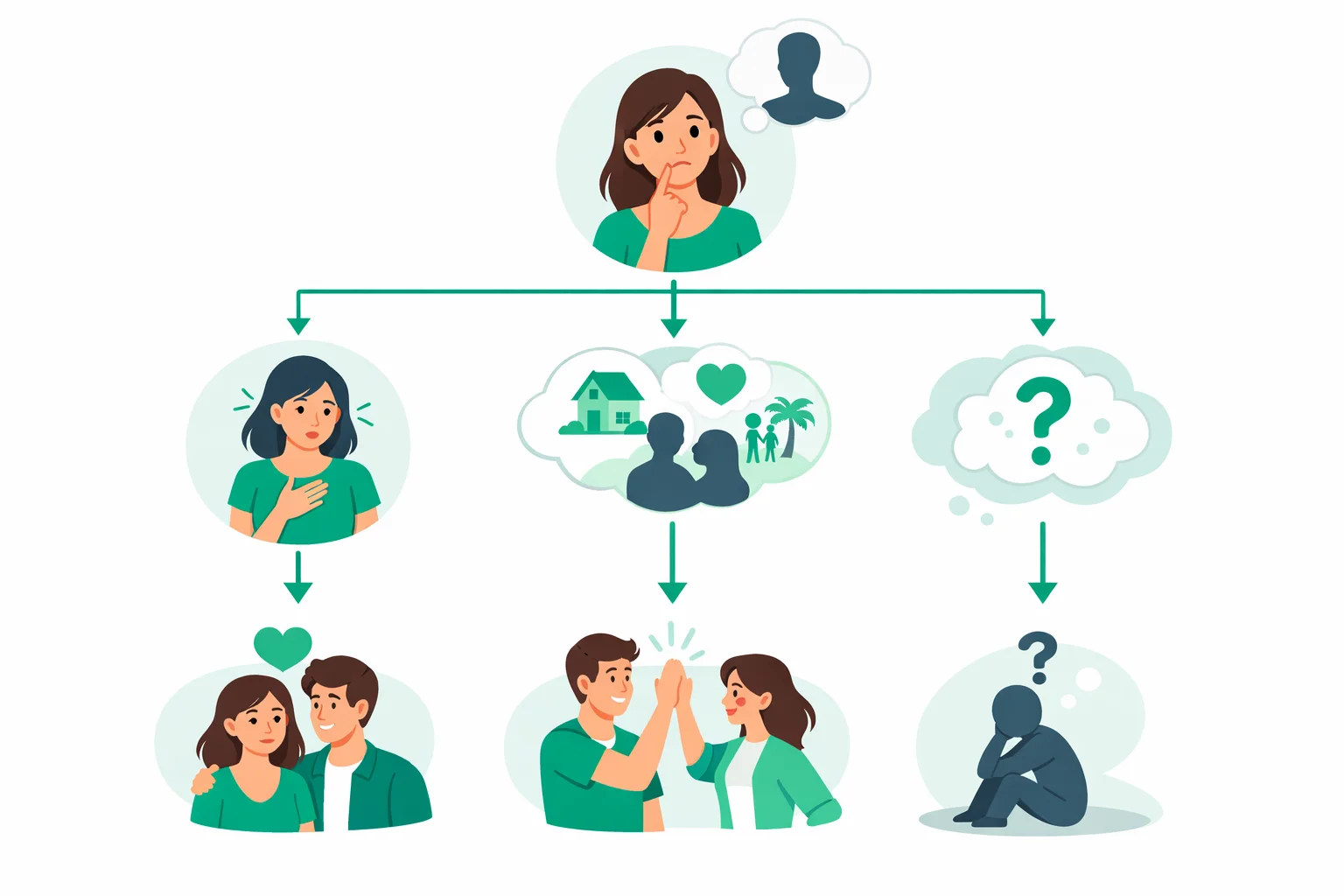
The Myth That You'll Just Know
Myth: if you really liked him, there'd be no doubt. Reality: doubt is often where a crush lives before it grows up. Early romantic feelings are genuinely ambiguous because your brain hasn't finished gathering evidence yet — it's mid-investigation, not mid-verdict. Researchers who study how attraction forms describe it as a slow accumulation of small signals rather than a single switch, which is exactly why "do I like him or not" feels impossible to answer head-on.
That's the trick this quiz uses. Instead of asking the unanswerable big question, it asks twelve small, concrete ones: what your body does when his name lights up your phone, whether you reorganize plans to be near him, how it lands when he mentions another girl. Specific behavior is far easier to report honestly than a vague feeling, and once you stack twelve honest behaviors together, the pattern answers the big question for you. People who insist "you'll just know" have usually forgotten how confused they were right before they knew.
Why Butterflies Lie More Than You Think
Here's the most overrated symptom in the entire crush conversation: butterflies. We treat that fluttery, nervous stomach as proof of love, but the body can't actually tell the difference between excitement, fear, and attraction — it just produces arousal, and your mind slaps a label on it afterward. In the famous 1974 study by psychologists Donald Dutton and Arthur Aron, men who crossed a high, wobbly suspension bridge were far more likely to feel attracted to a woman waiting at the other end than men who crossed a low, safe one. Same woman, same conversation. The shaky bridge had nothing to do with romance — but their racing hearts got read as a crush. Psychologists call this misattribution of arousal.
So butterflies can mislead in both directions. They can flare for a guy who simply makes you nervous, and they can stay completely silent for someone you genuinely like but feel safe around. That's why this quiz refuses to crown the spark as the only evidence. It weighs the flutter against three steadier channels — what you do, what you protect, and what you imagine — because a calm, deep liking is still liking. If you've been dismissing your feelings because there were no fireworks, the butterflies myth may have talked you out of the truth.
What Actually Separates a Crush From a Friendship
A crush and a close friendship overlap a lot — warmth, laughter, wanting to be around each other. The difference hides in four specific channels, and this quiz scores each one separately so you can see exactly where you land:
- The Spark — the involuntary stuff: the stomach-flip at his name, the mood shift when he appears, replaying the evening before you sleep. It's the loudest signal but, as we just covered, the least reliable on its own.
- The Jealousy Test — how it feels when his attention goes to someone else. This is the channel friendship almost never trips, which makes it one of the most diagnostic.
- Your Effort — the quiet logistics of liking someone: dressing up a little more, engineering overlap, answering his texts first. Effort is hard to fake to yourself over time.
- Future Daydreams — whether your mind drifts into dates, holding hands, or picturing him in your life a year out. Friends rarely show up in that particular daydream.
The magic is in comparing the four, not just adding them up. A sky-high Spark with a flat Jealousy Test can mean attraction without real attachment — you like the buzz more than him. Steady Effort and Future Daydreams with a calmer pulse often means a deeper, quieter crush that's easy to overlook precisely because it doesn't feel dramatic. If your feelings turn out to be aimed at a guy you suspect likes you back, the natural follow-up is the does he like me quiz, which reads his side of the same four channels.
The Jealousy Test Most People Get Backwards
Plenty of advice tells you to ignore jealousy because it's "toxic" or immature. As a moral instruction, fine. As a diagnostic tool, that advice throws away your best data. Jealousy is one of the fastest, least-edited feelings you have — it fires before your conscious mind can dress it up or talk it down. That's precisely what makes it honest. When you feel a real pang as he laughs with someone else, part of you has already decided something your words haven't admitted yet.
Notice the word real. There's a difference between a sharp, surprising twist in your chest and a mild "huh, didn't expect that." The quiz is calibrated to catch the strong, involuntary version, because that's the one friendship doesn't usually produce. The classic misread is the person who swears they're "just friends" but quietly hates the idea of him dating anyone — that contradiction is the feeling leaking out through the one channel they can't fully control. If your jealousy score came back high while everything else stayed moderate, don't dismiss it. It's often the first domino to fall when a friendship is becoming something more, a theme the crush quiz explores from the other direction.
Can You Like Someone and Not Know It?
Honestly, yes — and it's more common than the movies suggest. Feelings can sit just below conscious awareness for weeks, especially when admitting them feels risky: he's a friend, he's taken, the timing's wrong, or you've been hurt before and your guard went up automatically. In those cases your behavior usually knows before your conscious mind does. You're already choosing the seat next to him, already a little too curious about his weekend, already deflating when he cancels — you just haven't connected the dots out loud.
There's also a slow-burn version that catches people off guard. The more time you spend around someone, the more familiar and safe they feel, and familiarity quietly nudges attraction upward for a lot of people. It's why a friend can suddenly look different after one long late-night conversation, a trip, or watching him handle something hard with grace. If you scored somewhere in the confusing middle, you might be catching a friendship at the exact moment it starts to tilt. Sit with the result for a few days rather than arguing with it — surprise is often a sign the quiz named something you weren't ready to say. And if you suspect this has already grown past a crush, the am I in love quiz picks up where this one leaves off.
All Five Results, From Just Friends to Falling Hard
Your score across the twelve questions sorts you into one of five honest verdicts. Here's what each one means.
💘 You're Already Falling for Him. Every channel is lit — spark, jealousy, effort, and daydreams all point the same way. This is the rarest result for a reason: that much alignment almost never happens for a friend. The only real question left is whether he feels it too, and how brave you're willing to be about it.
💞 Yep, It's a Crush. Clear romantic interest, even if one channel is lagging behind the others. Maybe the spark is obvious but the daydreams are shy, or the jealousy caught you off guard. The feelings are genuine; you're just early enough that your mind hasn't fully labeled them.
🌗 Something's There — But It's Unconfirmed. The most common landing spot, and a legitimate one. Your answers split between romantic and warm-but-platonic, which usually signals a friendship that's starting to tilt or a strong fondness that hasn't decided what it is. This is a "gather more data" result, not a failure to figure it out.
🌤️ Strong Fondness, Not a Crush. You genuinely like him as a person, but the telltale channels — jealousy and future daydreams — stayed quiet. That points to a valued friend rather than someone you're falling for. It can change over time, but right now the romance isn't lighting up.
🪶 This Reads as Friendship. Comfortable and easy, with none of the nervous spark, territorial pang, or future-building that marks a crush. If you came in worried you were catching feelings, this is a clear, kind no — you can relax and enjoy the friendship for exactly what it is.
So What Do You Do Now?
Whatever your result, resist the urge to act on it the same hour. A score is a snapshot of how you feel, not a script for what to say. If you landed in crush territory, sit with the relief of finally naming it, then pay attention to his signals over the next couple of weeks before deciding anything. If you landed in friendship, let that be permission to stop scrutinizing every warm moment. And if you're in the murky middle, give it a month and retake this — feelings that are genuinely growing will nudge the score upward, while a passing flutter will fade. The honest answer was always inside you. The quiz just helped you stop arguing with it.