South America Map Quiz: Why Most People Fail the Guianas and How to Fix Your Mental Map
The South America map quizsounds easy — only 12 countries on a continent shaped like an upside-down triangle. But hand someone a blank map and ask them to click Suriname? Roughly 78% of quiz-takers miss it entirely. A 2022 National Geographic survey found that Americans identified South American countries with just 54% accuracy on average — worse than Europe (61%) and far behind North America (89%). The problem isn't the number of countries. It's that most people can name Brazil, Argentina, and maybe Chile, then their mental map dissolves into vague green space.
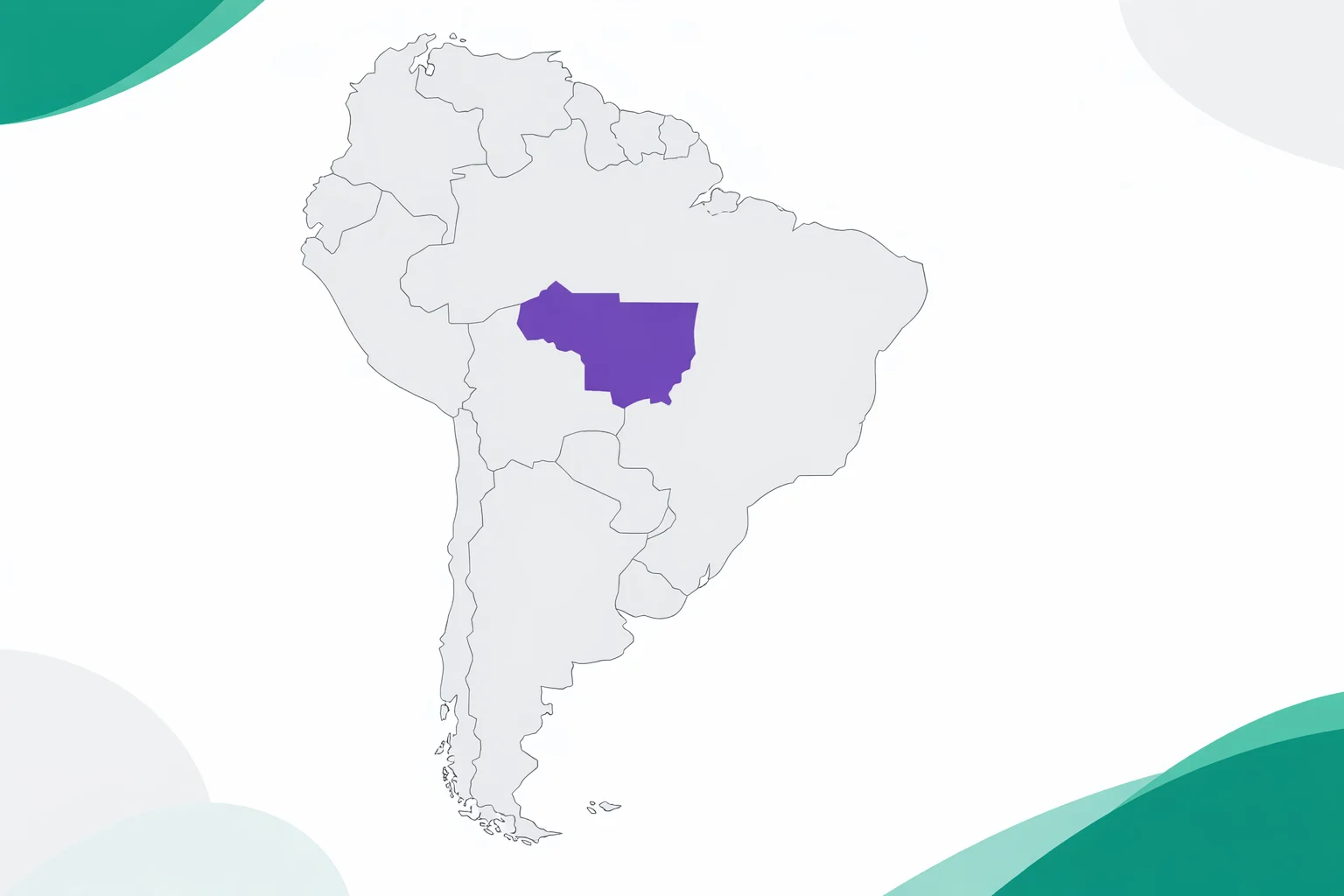
Why South America Trips People Up
Twelve countries sounds manageable until you realize how unevenly they're distributed. Brazil alone occupies 47.3% of the continent's area. That leaves 11 countries crammed into the other half, and three of them — Guyana, Suriname, and French Guiana (a French territory, not a sovereign state) — sit in the northeast where most people picture the Caribbean. The mental model breaks because the Guianas don't feelSouth American in pop culture. They're English and Dutch-speaking in a continent dominated by Spanish and Portuguese.
Then there's the Andean spine. Peru, Bolivia, Ecuador, Colombia, and Chile all stack along the western edge, separated by the Andes Mountains. On a flat map they blend into a narrow strip, and distinguishing Bolivia from Peru requires knowing which one is landlocked (Bolivia lost its coastline in the War of the Pacific, 1879-1884, and has never gotten over it).
The southern cone adds its own confusion. Paraguay and Uruguay share a suffix, sit in roughly the same latitude range, and both border Argentina and Brazil. At least one of them is almost always misclicked on first attempts.
How This Map Quiz Works
The quiz cycles through all 12 South American countries in random order. Each round shows a country name — your job is to click where it sits on the blank map. Green flash means correct. Red flash means wrong, and the correct location lights up in green so you learn on every miss. No timer. No penalty for speed. Research on spatial memory by Kornell and Bjork at UCLA shows untimed retrieval practice builds stronger long-term recall than rushed guessing.
Your results break down by four sub-regions — Northern, Andean, Southern Cone, and Brazil — so you can pinpoint exactly where your geographic blind spots live. If you want to compare formats, our countries of the world quiz tests recall instead of recognition: you type country names from memory rather than clicking a map.
The Guiana Problem: Three Countries Nobody Can Place
Guyana, Suriname, and French Guiana form a trio in the northeast corner that confuses nearly everyone. Here's the quick breakdown:
- Guyana — Westernmost of the three. English-speaking. Borders Venezuela and Brazil. Capital: Georgetown.
- Suriname — In the middle. Dutch-speaking (the smallest country in South America by area). Capital: Paramaribo.
- French Guiana— Easternmost. Not an independent country — it's an overseas region of France, which is why it isn't in this quiz. Home to the European Space Agency's launch site at Kourou.
The memory trick: G-S-F from west to east — the same alphabetical order they appear in if you list them by name. Guyana first, Suriname second, French Guiana third. Or think of it as "Great Sunsets Face east"— silly, but that's the point. Mnemonics work because they create a retrieval hook your brain can grab during the quiz.
Paraguay vs. Uruguay: The Name Trap
These two trip up 40-60% of quiz-takers. The names sound similar, but geographically they're quite different:
| Feature | Paraguay | Uruguay |
|---|---|---|
| Coastline | Landlocked — no ocean access | Atlantic coast |
| Position | Inland, between Bolivia and Argentina | Coastal, between Argentina and Brazil |
| Size | 406,752 km² | 176,215 km² |
| Capital | Asunción | Montevideo |
| Population | ~7.4 million | ~3.4 million |
The best mnemonic: Uruguay has a U-shaped coast. Paraguay is parallel to the coast but doesn't touch it. Once you anchor Uruguay on the Atlantic side, Paraguay falls into place automatically.
Region-by-Region Memory Strategy
Don't memorize all 12 at once. Break them into four blocks and master one per practice round.
Northern (4 countries) — Colombia and Venezuela sit at the top, both touching the Caribbean Sea. Colombia is on the left (Pacific coast too), Venezuela on the right. Below them, Guyana and Suriname stack east-to-west along the Atlantic. Anchor: Colombia connects to Panama and Central America.
Andean (3 countries) — Ecuador, Peru, and Bolivia run north-to-south along the western edge. Ecuador is the smallest and sits on the equator (the name is a giveaway). Peru is below Ecuador, with its distinctive coastline. Bolivia is landlocked, tucked between Peru, Chile, and Brazil. Anchor: Ecuador = Equator.
Southern Cone (4 countries)— Chile is the unmistakable long strip on the Pacific coast. Argentina fills the southern bulk of the continent east of Chile. Paraguay sits above Argentina, landlocked. Uruguay is the small coastal country east of Argentina. Anchor: Chile's shape is unforgettable. For a different kind of regional challenge, our Europe map quiz packs 44 countries into an area smaller than Brazil.
Brazil— It's its own region because it borders every country except Chile and Ecuador. If the map has one massive shape in the east, that's Brazil. Nobody misses Brazil.
Size Comparison: How Big Are They Really?
Size matters on a map quiz because larger countries have bigger click targets. Here's how the 12 stack up relative to US states and European countries — a comparison that tends to surprise people:
| Country | Area (km²) | Comparable To |
|---|---|---|
| 🇧🇷 Brazil | 8,515,767 | Larger than the contiguous US |
| 🇦🇷 Argentina | 2,780,400 | About the size of India |
| 🇵🇪 Peru | 1,285,216 | Twice the size of Texas |
| 🇨🇴 Colombia | 1,141,748 | About the size of France + Spain |
| 🇧🇴 Bolivia | 1,098,581 | Slightly smaller than Colombia |
| 🇻🇪 Venezuela | 916,445 | Roughly the size of Nigeria |
| 🇨🇱 Chile | 756,102 | 4,300 km long, avg. 177 km wide |
| 🇵🇾 Paraguay | 406,752 | About the size of California |
| 🇪🇨 Ecuador | 276,841 | About the size of Colorado |
| 🇬🇾 Guyana | 214,970 | About the size of Great Britain |
| 🇺🇾 Uruguay | 176,215 | About the size of Washington state |
| 🇸🇷 Suriname | 163,820 | About the size of Tunisia |
Brazil, Argentina, and Peru make up about 71% of the continent's total area. If you can nail those three — and they're hard to miss — you only need to sort out nine smaller countries in the remaining 29% of the map. For flag-based identification instead of map-based, try our flags of the world quiz.
All 5 Score Tiers Explained
Your quiz result places you in one of five tiers based on how many of the 12 countries you click correctly:
🏆 Perfect Score (12/12): All 12 countries identified correctly — including Suriname, Guyana, and the Paraguay/Uruguay pair. About 15% of first-time players achieve this. Your mental map of South America is locked in tight.
🌟 Geography Expert (10-11): Near-perfect. The 1-2 misses almost always come from the Guianas or the Paraguay/Uruguay swap. You know the continent well — one focused review of the northeast or southern cone should push you to 12. Top 20% of players.
🎯 Continental Navigator (8-9): The major countries — Brazil, Argentina, Chile, Colombia — are locked in. Your gaps are in the smaller countries, likely the Guianas or landlocked Bolivia and Paraguay. Above average, better than 55% of players.
🧭 Getting There (5-7): You can identify the big, distinctive shapes but struggle with mid-sized Andean and northern countries. This is the average first-attempt score. The region-by-region strategy above will push you past 9 on your next try.
🗺️ Exploring South America (0-4):Twelve countries is genuinely manageable — far fewer than Africa's 54 or Europe's 44. Two or three practice rounds will double your score. The quiz feedback loop teaches you every time you miss, so each retry is an active learning session.
How to Lock South America Into Your Memory
Spatial learning requires spatial practice — reading a list of country names doesn't build the same neural connections as clicking them on a map. The hippocampus, the brain region responsible for spatial navigation, gets activated when you physically interact with map-based tasks. London cab drivers famously have enlarged hippocampi from years of spatial navigation — and map quizzes tap into that same system.
Start with anchors. Brazil, Chile, and Argentina have unmistakable shapes. Once those three are placed, their borders constrain where everything else can go. Colombia and Venezuela fill the north. Ecuador, Peru, and Bolivia stack along the west. The Guianas sit in the northeast. Paraguay and Uruguay fit into the remaining gaps in the south.
Use the quiz's miss list.After each round, look at which countries you got wrong. Those are your study targets. Don't replay the entire quiz hoping to stumble into improvement — focus on the specific countries that tripped you. Targeted retrieval practice outperforms broad review according to decades of cognitive research (Roediger & Butler, Trends in Cognitive Sciences, 2011).
Connect countries to stories.Bolivia was named after Simón Bolívar. Ecuador sits on the equator. Suriname was a Dutch colony until 1975. Chile produces more than a third of the world's copper. These facts create memory hooks that pure map study doesn't provide. Want to expand your geographic challenge? Our Africa map quiz covers 54 countries, and the Asia map quiz spans 48 across five sub-regions.