Divergent Faction Quiz: The Five Factions Explained and What Your Choice Reveals
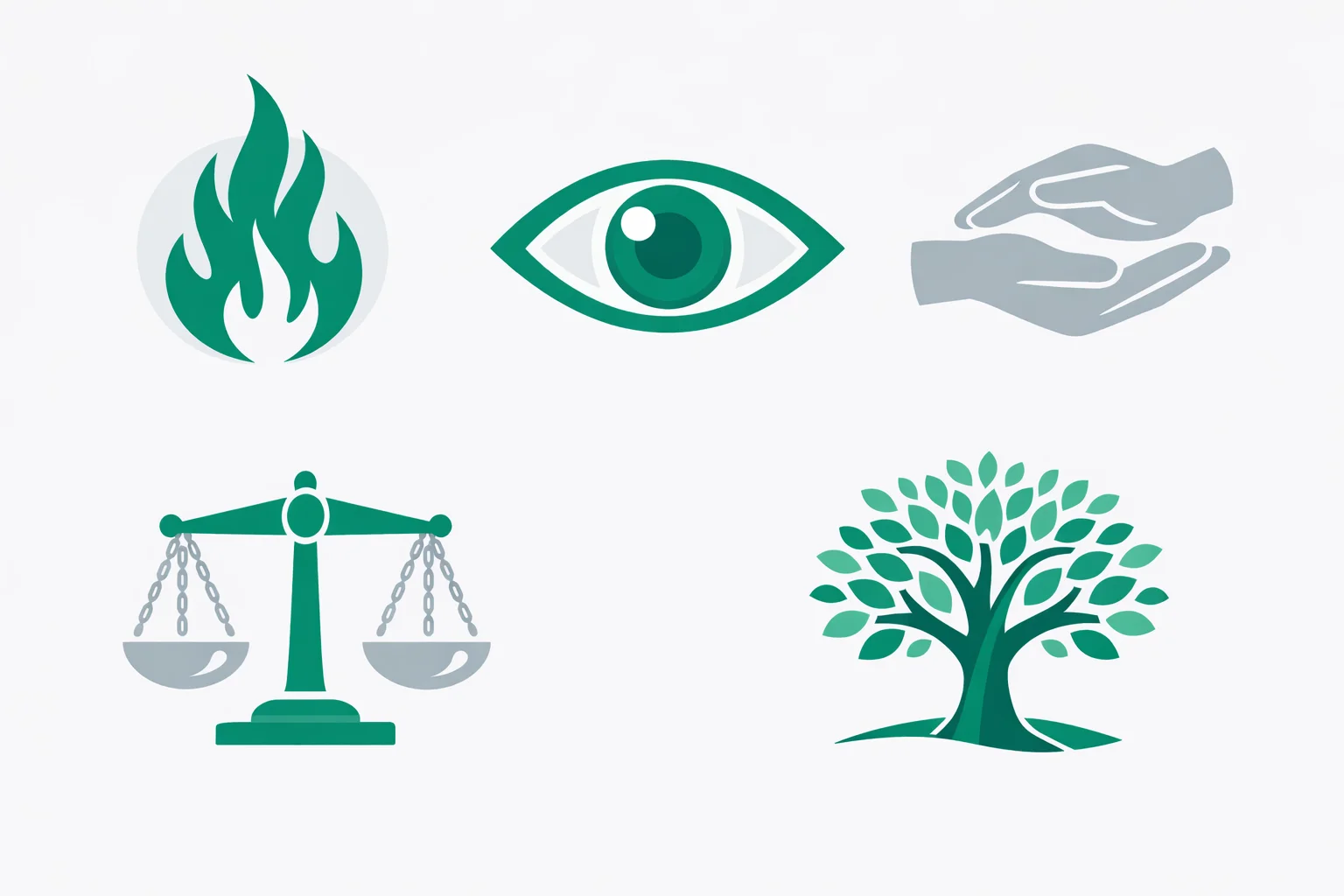
The Divergent faction quizis the closest thing you'll get to the aptitude test from Veronica Roth's dystopian trilogy — minus the hallucination serum. In the Divergent universe, every 16-year-old takes a simulation-based test that reveals which of five factions matches their deepest personality traits: Dauntless (bravery), Erudite (intelligence), Abnegation (selflessness), Candor (honesty), or Amity (peace). A few rare individuals show aptitude for multiple factions — they're called Divergent, and the system considers them dangerous.
What Is the Divergent Faction Quiz?
Veronica Roth built her faction system on a simple premise: every major human flaw can be eliminated if society organizes around opposing virtues. Dauntless exists because cowardice allows evil to go unchallenged. Erudite exists because ignorance breeds poor decisions. Abnegation exists because selfishness tears communities apart. Candor exists because deception poisons trust. Amity exists because aggression destroys everything it touches.
This divergent quiz adapts that concept into 15 scenario-based questions that measure your instinctive responses to conflict, fear, moral dilemmas, and social situations. Each answer maps to one of the five factions. The faction you answer into most frequently is the one that claims you — but if your answers spread evenly across three or more factions, you get the rare Divergent result.
How the Aptitude Test Works
In the books, the aptitude test is a simulation — you're injected with a serum that creates a hyper-realistic scenario, and your unconscious reactions reveal your true faction alignment. Our quiz works on the same principle, just without the needles. Each question puts you in a situation where there's no obviously "right" answer — only the answer that feels most natural to you.
The quiz measures five core dimensions of personality:
- Courage threshold — How you respond to physical or emotional danger (Dauntless)
- Knowledge orientation — Whether you prioritize understanding over action (Erudite)
- Self-sacrifice instinct — How quickly you put others before yourself (Abnegation)
- Truth compulsion — Whether honesty trumps diplomacy in your value system (Candor)
- Harmony drive — How strongly you seek peace and avoid conflict (Amity)
A 2019 study in the Journal of Personality and Social Psychologyfound that scenario-based personality assessments predict real-world behavior more accurately than self-report questionnaires — which is exactly why the fictional aptitude test uses simulations rather than written exams. Our quiz borrows that approach: you don't rate yourself on a scale, you choose what you'd actually do.
The Five Factions Explained
Here's a side-by-side look at what each faction stands for, what it opposes, and who in the series represents it best:
| Faction | Virtue | Opposes | Key Character |
|---|---|---|---|
| 🔥 Dauntless | Bravery | Cowardice | Four / Tobias Eaton |
| 📘 Erudite | Intelligence | Ignorance | Jeanine Matthews |
| 🤲 Abnegation | Selflessness | Selfishness | Andrew Prior |
| ⚖️ Candor | Honesty | Deception | Jack Kang |
| 🌳 Amity | Peace | Aggression | Johanna Reyes |
What makes the faction system fascinating is that every virtue becomes a flaw when taken to extremes. Dauntless bravery becomes recklessness. Erudite intelligence becomes cold manipulation. Abnegation selflessness becomes self-erasure. Candor honesty becomes cruelty. Amity peace becomes complacency. The whole point of Roth's trilogy is that no single virtue is sufficient — which is why Divergent individuals threaten the system.
The Psychology Behind the Factions
Roth didn't invent these personality archetypes from scratch. The five factions map surprisingly well onto the Big Five personality traits — the most widely validated personality framework in psychology. Dauntless corresponds to low neuroticism (emotional resilience under stress). Erudite maps to openness to experience (intellectual curiosity). Abnegation reflects high agreeableness (prioritizing others' needs). Candor aligns with low agreeableness combined with high conscientiousness (valuing truth over social harmony). Amity maps to high agreeableness and low neuroticism (calm, warm, conflict-averse).
The Divergent result — showing aptitude for multiple factions — parallels what psychologists call "psychological flexibility." Research by Todd Kashdan at George Mason University shows that people who can shift between different behavioral strategies depending on context tend to have better mental health, stronger relationships, and more career success. In Roth's world, this flexibility is threatening. In the real world, it's a superpower.
Curious how your faction maps to other personality frameworks? Our Percy Jackson Cabin Quiz sorts you by similar dimensions — Dauntless fans often land in Ares or Zeus, while Erudite types tend to get Athena.
Divergent Factions vs Hogwarts Houses vs PJO Cabins
Every fandom has a sorting system, and fans love comparing them. Here's how the three biggest franchise sorting systems line up:
- Dauntless ↔ Gryffindor ↔ Ares/Zeus cabin — all value courage and bold action
- Erudite ↔ Ravenclaw ↔ Athena cabin — all prioritize knowledge and strategy
- Abnegation ↔ Hufflepuff ↔ Demeter cabin — all center on service and loyalty
- Candor ↔ Slytherin (partial) ↔ Hades cabin — all value uncomfortable truths over comfortable lies
- Amity ↔ Hufflepuff (partial) ↔ Apollo/Aphrodite cabin — all seek harmony and connection
The key difference? Hogwarts sorts by what you value most. Percy Jackson sorts by who you are fundamentally. Divergent sorts by what you would sacrifice everything for. Same person, three different lenses — which is why someone can be Gryffindor, Poseidon cabin, and Dauntless without any contradiction.
If you haven't tried it yet, our Lightsaber Color Quiz adds a fourth dimension — your Force alignment reveals something completely different about how you wield power.
What Makes Someone Divergent?
In Roth's world, Divergent individuals are rare because most people's minds naturally settle into one dominant mode of thinking. The simulation serum works by activating one neural pathway at a time — but a Divergent brain fires across multiple pathways simultaneously, which is why simulations cannot control them.
Tris Prior showed aptitude for three factions: Abnegation (her upbringing made her instinctively selfless), Dauntless (her natural bravery), and Erudite (her analytical mind). Four/Tobias also tested Divergent with aptitude for Abnegation and Dauntless. The books suggest that Divergence runs in families and may be linked to genetic diversity — the "genetically pure" individuals in Allegiant are essentially the most psychologically flexible people in the population.
Here's what the books don't say but the real-world parallel makes clear: being Divergent is not actually rare. Most well-adjusted adults draw from multiple value systems depending on context. You can be brave at work, selfless at home, and intellectually curious in your free time. The faction system only works because it forces people to suppress every trait except one — and that suppression is exactly what makes the society unstable.
All 6 Divergent Faction Results
Whether you're comparing results with friends or curious what you might have gotten, here's every possible outcome from this divergent faction quiz.
🔥 Dauntless — The Brave. You charge into fear while others freeze. Dauntless personalities are physical, instinct-driven, and fiercely protective of the people they love. You trust your gut, crave intensity, and find comfort suffocating. Your challenge is learning that not every situation requires a fight — sometimes the bravest thing is walking away.
📘 Erudite — The Intelligent. Your mind is always running. Erudite personalities are analytical, curious, and driven by an insatiable need to understand how things work. You make decisions based on evidence rather than emotion and find ignorance genuinely painful. Your challenge is remembering that knowledge without empathy can do as much harm as ignorance.
🤲 Abnegation — The Selfless. You notice what others need before they ask. Abnegation personalities are quiet, observant, and instinctively put others first — not out of weakness, but because they believe service is the highest form of strength. You are the person everyone turns to in a crisis. Your challenge is making sure you do not erase yourself in the process of caring for everyone else.
⚖️ Candor — The Honest. Lies physically bother you. Candor personalities are direct, perceptive, and allergic to deception in all its forms. You read people effortlessly and say what everyone else is too afraid to voice. Some find your honesty harsh, but the people who truly know you understand that your directness comes from deep respect. Your challenge is recognizing that sometimes truth needs timing.
🌳 Amity — The Peaceful. You believe kindness changes more minds than force ever could. Amity personalities are warm, patient, and genuinely skilled at bringing people together. You de-escalate tension instinctively and see the humanity in people that others have written off. Your challenge is accepting that some conflicts cannot be resolved with diplomacy — and that standing firm is not the same as being aggressive.
🔀 Divergent.Your mind refuses to fit into a single box. Divergent results mean your personality draws almost equally from multiple faction values — you can be brave, intellectual, selfless, honest, and peaceful depending on what the moment demands. In Roth's world, this makes you a threat to the system. In real life, it makes you unusually adaptable.
What Your Faction Reveals About You
Your faction result isn't just a fandom label — it highlights real patterns in how you process fear, make decisions, and relate to other people. Here's how to use it:
- Lean into your faction's strength. Dauntless? Stop second-guessing your instincts. Erudite? Trust your analytical process. Abnegation? Your empathy is not a weakness — it's your defining advantage.
- Watch for the shadow side. Every faction virtue becomes toxic when unbalanced. Bravery becomes recklessness. Intelligence becomes detachment. Selflessness becomes self-neglect. Honesty becomes cruelty. Peace becomes passivity. Knowing your faction means knowing which extreme to guard against.
- Check your secondary faction. Your secondary influence adds depth. A Dauntless-Erudite blend is a strategically brave risk-taker. A Candor-Abnegation blend is someone who tells hard truths specifically to help people. The combination matters as much as the primary result.
- Compare with friends. The faction system becomes most interesting when you map your friend group. Faction compatibility explains why certain relationships feel effortless (Dauntless-Candor share directness) and why others require work (Erudite-Amity have fundamentally different approaches to conflict).
For a completely different angle on your personality, try our What Animal Am I Quiz — Dauntless types often match with wolves or eagles, Erudite personalities land on owls, and Amity results line up with dolphins.