Classpect Quiz: Every Homestuck Class and Aspect Explained
The classpect quiz above assigns you one of 144 possible Homestuck combinations — a Class that defines how you wield power and an Aspect that determines the domain of reality you control. Andrew Hussie's Sburb classification system, built across 8,000+ pages of the Homestuck webcomic, is one of the most intricate personality frameworks in fandom history. It outdoes most fictional sorting systems because it operates on two independent axes instead of one — you are not just sorted into a single house or faction, but assigned a role and a domain that interact in unique ways.
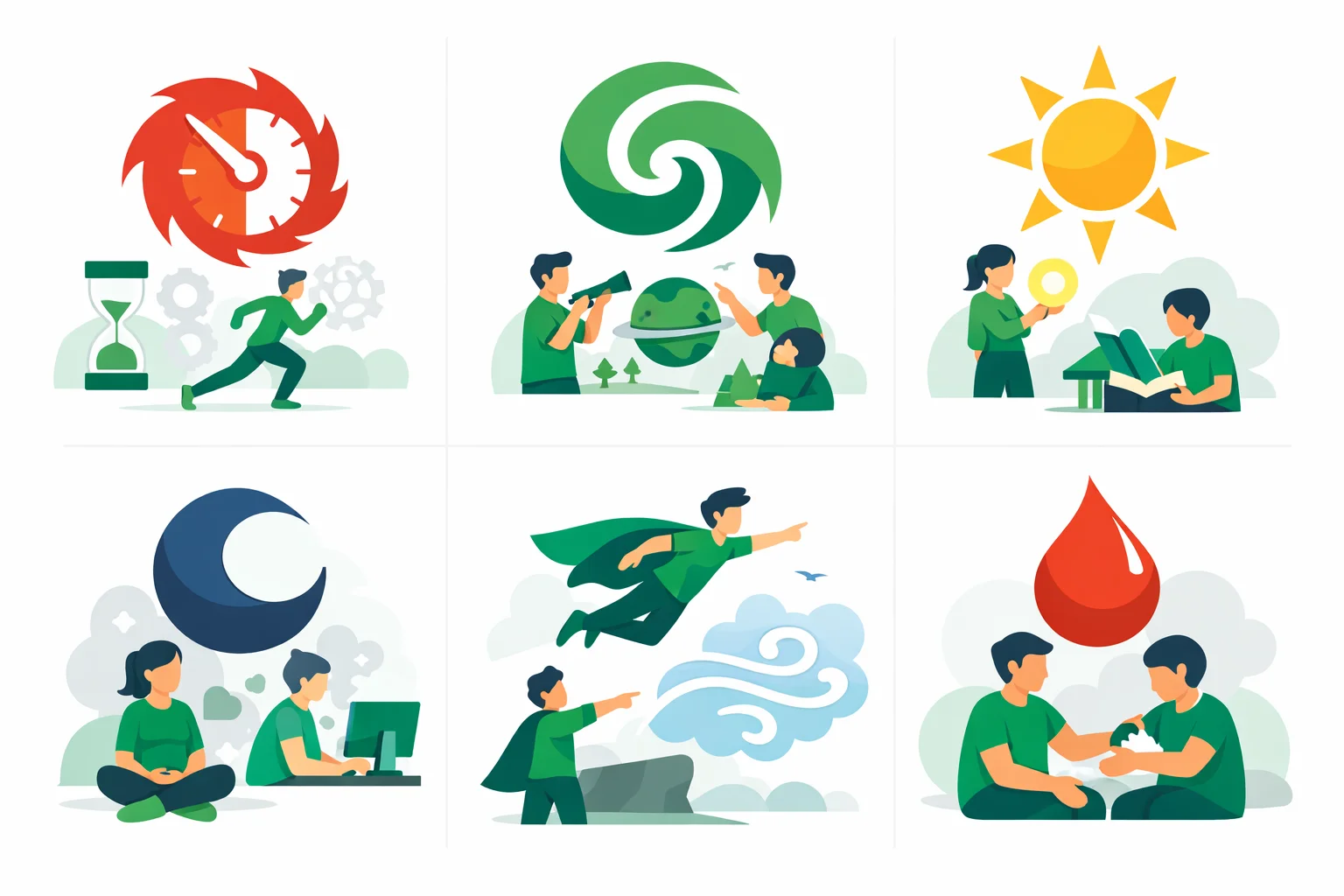
What Is a Classpect?
A classpect is Homestuck's term for the combination of a Class and an Aspect assigned to every Sburb player. Think of it as a two-word title that describes your mythological role in the game — and, if you read between the lines, your personality. Dave Strider is the Knight of Time. Rose Lalonde is the Seer of Light. Vriska Serket is the Thief of Light. Each title tells you exactly how that character relates to their power.
The class is the verb — how you interact with your power. Knights exploit and weaponize. Seers observe and guide. Thieves steal. Princes destroy. The aspect is the noun — what domain of reality you command. Time, Space, Light, Void, Mind, Heart. Put them together and you get a complete mythological identity: a Witch of Space manipulates creation and form, while a Maid of Time creates and serves through temporal flow.
What makes the system fascinating is that no single axis tells the whole story. Two Knights are fundamentally different people if one commands Time and the other commands Blood. Two Time players behave differently if one is a Knight (weaponizes time to protect others) versus a Seer (perceives time to guide others). The interaction between class and aspect is where the real depth lives.
How This Classpect Quiz Works
Our homestuck quiz splits into two phases. Questions 1 through 8 measure your Class — they probe how you relate to power, responsibility, conflict, and other people. Do you protect through self-sacrifice (Knight)? Do you observe and advise (Seer)? Do you grow slowly into immense potential (Page)? Do you tear down what doesn't work (Prince)?
Questions 9 through 15 measure your Aspect — they dig into your core philosophy, fears, and what you believe matters most. Are you obsessed with freedom (Breath) or bonds (Blood)? Are you drawn to knowledge and truth (Light) or comfortable in mystery and the unknown (Void)? Do you trust logic and decisions (Mind) or identity and self-knowledge (Heart)?
The quiz tallies your answers independently for each axis, then combines the highest-scoring Class with the highest-scoring Aspect. If you tied on multiple aspects, it selects based on tiebreaker rules that favor the aspect you answered first, mimicking how early instincts tend to be the most authentic. You also receive a secondary Aspect — the domain you almost landed in — because most people are not defined by a single force.
All 12 Homestuck Classes Explained
Here is every class in the Sburb system, grouped by their functional pairs. Hussie designed classes as mirrors — each active class has a passive counterpart that performs a similar function through a different mechanism.
| Class | Role | Active/Passive | Mirror Class |
|---|---|---|---|
| ⚔️ Knight | Exploits aspect for others | Active | Page |
| 📜 Page | Provides aspect to others | Passive | Knight |
| 🔮 Witch | Manipulates and breaks rules | Active | Heir |
| 👑 Heir | Inherits and becomes aspect | Passive | Witch |
| 🌟 Mage | Knows through experience | Active | Seer |
| 👁️ Seer | Understands and guides | Passive | Mage |
| 💥 Prince | Destroys aspect | Active | Bard |
| 🎭 Bard | Invites destruction of aspect | Passive | Prince |
| 🗡️ Thief | Steals aspect for self | Active | Rogue |
| 🎯 Rogue | Redistributes aspect to others | Passive | Thief |
| 🛡️ Maid | Creates aspect from nothing | Active | Sylph |
| 🌸 Sylph | Heals and restores aspect | Passive | Maid |
If this kind of personality-to-role mapping interests you, our Percy Jackson Cabin Quiz uses a similar approach to sort you into one of 12 Olympian cabins — and the overlap with classpect archetypes is striking. Knights of Blood often land in Poseidon cabin (both prioritize loyalty-through-sacrifice), while Seers of Light map cleanly to Athena (wisdom and strategic insight).
All 12 Aspects and What They Mean
Aspects come in opposing pairs, just like classes. Each pair represents two sides of the same coin — you can't fully understand Time without understanding Space, or Light without Void.
- Time ⏳ vs Space 🌌 — Momentum and endings versus creation and origins. Time is about change; Space is about form.
- Breath 💨 vs Blood 🩸 — Freedom and direction versus bonds and responsibility. Breath seeks independence; Blood holds groups together.
- Light ☀️ vs Void 🌑 — Knowledge and fortune versus secrecy and the unknown. Light illuminates; Void conceals.
- Life 💚 vs Doom 💀 — Growth and vitality versus limits and sacrifice. Life expands; Doom defines boundaries.
- Heart 💜 vs Mind 🧠 — Identity and soul versus decisions and logic. Heart is who you are; Mind is what you choose.
- Hope ✨ vs Rage 🔥 — Belief and possibility versus doubt and raw passion. Hope imagines the ideal; Rage confronts the real.
Notice the symmetry: your primary aspect has a natural opposite, and your secondary aspect often falls on the same axis. Someone with Time primary and Space secondary is deeply concerned with the creation-destruction cycle. Someone with Light primary and Mind secondary is obsessed with truth, knowledge, and the consequences of knowing.
Active vs Passive: The Hidden Axis
Most classpect discussions focus on class and aspect as separate categories. But the real analytical power comes from the active-passive spectrum that runs through the entire system.
Active classes (Knight, Witch, Mage, Prince, Thief, Maid) act directly on their aspect. They use it, manipulate it, destroy it, or steal it. Passive classes (Page, Heir, Seer, Bard, Rogue, Sylph) let their aspect flow through them to benefit others. They provide it, inherit it, understand it, or redistribute it.
Here is the insight most Homestuck analyses miss: the active-passive distinction does not map to introversion vs extroversion. A passive Seer can be deeply extroverted — they just use their power for the group rather than themselves. An active Thief can be a quiet loner who hoards Light (knowledge, luck) for personal use. The axis measures direction of benefit, not social orientation. This parallels how our Leadership Style Quiz distinguishes between leaders who empower teams versus those who drive results through personal action — the same fundamental split.
The active-passive axis also predicts character arcs. Active characters typically struggle with selfishness (taking too much for themselves) and need to learn generosity. Passive characters struggle with powerlessness (giving too much away) and need to learn self-advocacy. Dave (Knight, active) had to stop hiding behind irony and actually fight. Rose (Seer, passive) had to stop advising from the sidelines and take direct action. Their classpects predicted their growth arcs.
Classpect vs Hogwarts, MBTI, and Divergent
Fandom sorting systems don't exist in a vacuum. Here's how classpects compare to other frameworks — and what each uniquely reveals:
Classpect vs Hogwarts Houses:Hogwarts sorts by a single axis — values. Gryffindor values bravery, Ravenclaw values knowledge. Classpect splits personality into role (how) and domain (what), creating 144 combinations versus just 4 houses. A Knight of Light and a Seer of Light both operate in the "knowledge" domain but approach it completely differently — one weaponizes information, the other perceives and shares it. Hogwarts would put them both in Ravenclaw.
Classpect vs MBTI: MBTI uses four binary axes (E/I, S/N, T/F, J/P) for 16 types. Classpect uses two multi-option axes (12 classes x 12 aspects) for 144 types. The systems actually complement each other well — MBTI's Thinking/Feeling axis maps loosely to Mind/Heart aspects, and the Judging/Perceiving axis echoes the active/passive class split.
Classpect vs Divergent Factions: Divergent's five factions map to values-based sorting, similar to Hogwarts. Dauntless aligns with Knights and Princes (action-oriented power). Erudite maps to Seers and Mages (knowledge-oriented). If you're curious how your values compare, try our Divergent Faction Quiz — many fans find their Divergent faction and their classpect aspect share a common thread.
All Classpect Results at a Glance
Since the quiz produces a combination result, here is a reference for every class and every aspect you can receive. Compare your result with friends, or explore the ones you almost got.
👑 Heir. You inherit your aspect so naturally that you might not realize how deeply it flows through you. Heirs become their aspect — they do not just use it, they embody it. Your growth comes from recognizing the gift you already have.
👁️ Seer. You perceive patterns and truths within your aspect that others completely miss. Your role is not to act directly but to guide your team with the understanding you have gained. The best Seers learn when to share their vision and when to let others discover it.
⚔️ Knight. You weaponize your aspect to defend others, often at personal cost. Knights hide insecurity behind competence and duty. You are the one who steps up when the team needs protection, even if it means sacrificing your own comfort.
🔮 Witch. You bend and break the rules of your aspect to reshape reality. Witches refuse to accept limitations — if the system says something is impossible, you rewrite the system. Unconventional, defiant, and powerful.
🌟 Mage. You know your aspect through painful firsthand experience. Mages gain wisdom the hard way — through suffering, failure, and trial. That earned knowledge is invaluable because it comes from living through it, not reading about it.
🌸 Sylph. You heal and restore your aspect wherever it has been damaged. Sylphs fix broken systems, mend wounded people, and repair what should not have been destroyed. You step in automatically when something is wrong.
📜 Page. You start with massive untapped potential that slowly grows into the most powerful expression of your aspect. Pages are late bloomers — underestimated early, world-changing later. Your arc is one of growth and eventual mastery.
💥 Prince. You actively destroy your aspect or use it as a weapon of targeted demolition. Princes clear obstacles and tear down what does not work so something better can be built in its place.
🎭 Bard. You invite the chaotic destruction of your aspect — sometimes intentionally, sometimes just by existing. Bards are wildcards who unleash change without fully controlling it. Your power is in what you set free.
🗡️ Thief. You take your aspect from others to benefit yourself. Thieves see resources and advantages that belong to someone else and claim them — not out of cruelty, but because you understand that power unused is power wasted.
🎯 Rogue. You redistribute your aspect from the powerful to the powerless. Rogues are the Robin Hoods of Sburb — taking from those who hoard and giving to those who need. Selflessness is your weapon.
🛡️ Maid. You create your aspect from nothing through dedication and service. Maids build foundations where none existed before, and they protect what they have built with fierce devotion.
What to Do With Your Classpect Result
Your classpect is more than a fun Homestuck sorting result — it maps real personality tendencies that you can actually use:
- Understand your class arc. Active classes need to learn to share their power. Passive classes need to learn to claim their own. Which challenge resonates with you? That is your growth edge.
- Explore your aspect pair. If you got Light, study Void too — your opposite aspect reveals your blind spots. Heart players should examine Mind. Time players should contemplate Space. Growth happens at the intersection.
- Compare with friends. The classpect system really shines when you map your friend group. A Knight of Blood paired with a Seer of Mind makes an incredibly effective team. A Prince of Hope and a Page of Hope would clash spectacularly. Understanding these dynamics explains real friendship tensions.
- Retake when you feel different. Your class tends to stay stable because it reflects how you handle power — a deep personality trait. Your aspect can shift as your values and worldview evolve. Coming back after a major life change often reveals growth you did not notice while it was happening.
- Read the comic. If you have not read Homestuck, watching your classpect play out in the story adds layers to both the character and your understanding of yourself. Start at homestuck.com — it is free.